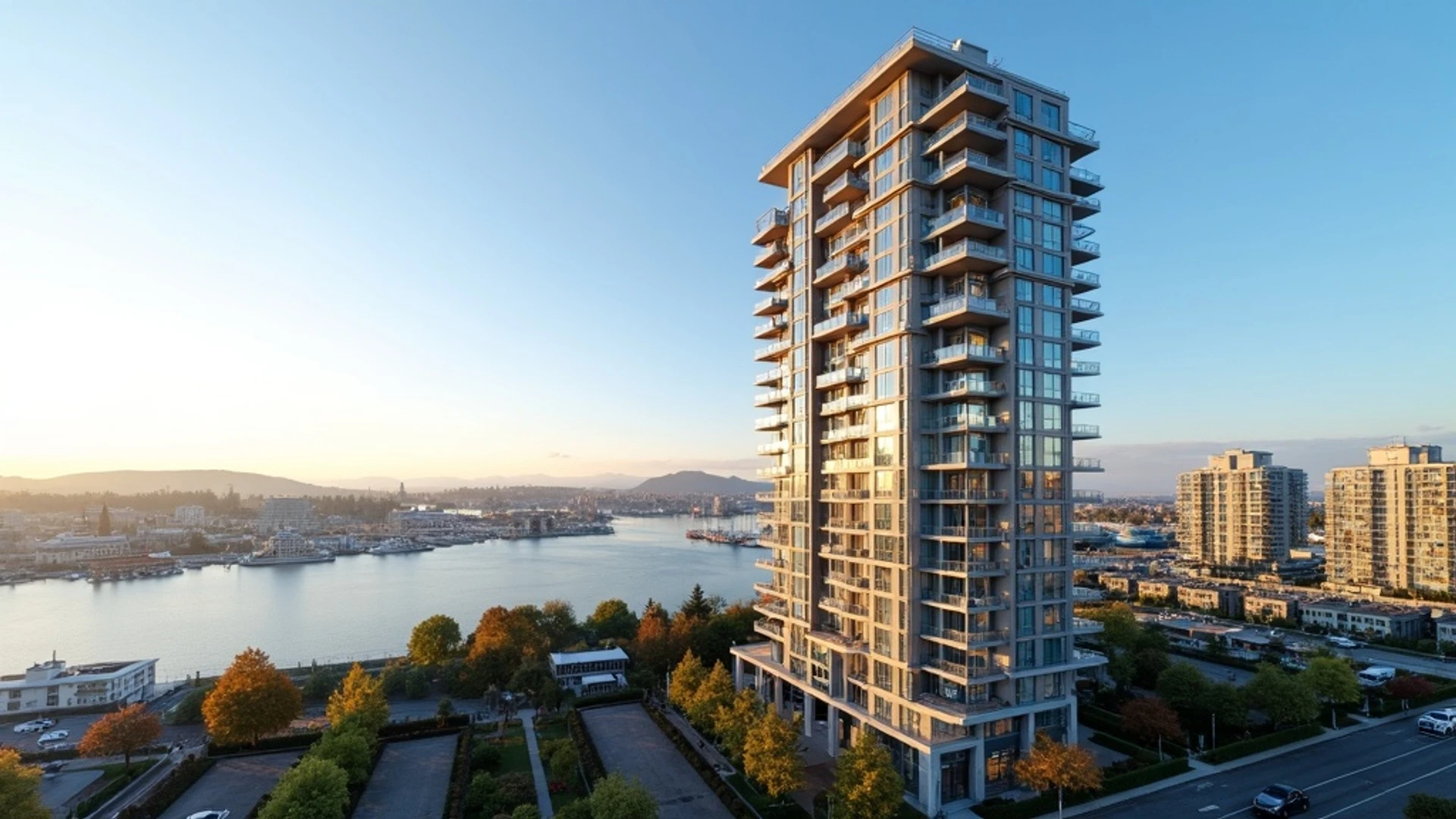
Victoria BC has one of the most consistently active condominium markets on the west coast. Prices are high relative to rental income, which means most listings do not make sense as investments. The ones that do tend to share a specific set of characteristics, and identifying them requires more than a price comparison.
What makes a condo investment grade
The starting point is the relationship between list price and what comparable units in the same building have actually sold for. A unit priced below its building's recent sale average is not automatically a good deal, but it is worth analyzing. The gap between list price and fair value is the first filter.
The second is rental economics. Victoria's rental market is tight, particularly for one and two bedroom units in core neighbourhoods. That said, strata fees vary dramatically between buildings, and a high strata fee can turn a promising cash flow number into a negative one. The fee structure of the specific building matters as much as the submarket rent level.
Third is data confidence. A building with six closed sales in the past 18 months gives you a much clearer picture of fair value than one with a single comp from three years ago. Thin comparable data increases risk, and that risk should be reflected in how you price the deal.
Neighbourhoods worth targeting in Greater Victoria
Sidney real estate consistently surfaces strong cap rates relative to its price point. The rental market there is supported by year-round demand from retirees and workers connected to the Saanich Peninsula, and prices remain lower than the urban core.
Saanich East real estate offers a wide range of strata product, from compact units near UVIC to larger mid-rise condos along major corridors. Rental demand is strong and building inventory is deep enough to produce reliable comp data.
Langford real estate has seen significant new strata construction over the past decade. Newer buildings mean lower maintenance risk and fewer special levy exposures, and the rental market has grown proportionally with the population base.
Downtown Victoria and James Bay real estate carry higher price points, which compresses cap rates. Strong appreciation history partially offsets that, but cash flow at current financing rates is typically negative in the urban core. These areas suit a different investor profile.
What to watch for in the strata documents
Rental restrictions are the most common deal-killer. Some strata corporations cap the number of rentals in the building, and if that cap is already at or near the limit, the unit is not rentable regardless of how good the numbers look. This needs to be confirmed before any offer is written.
The depreciation report and contingency reserve fund balance tell you whether the building has been maintained and whether a special levy is likely. A depleted contingency fund in an aging building is a significant risk that does not show up in the list price.
Age restrictions (55+) are less common but worth checking, as they eliminate a large portion of the rental pool. Airbnb restrictions have also become more common following provincial short-term rental legislation, which removed the income premium that short-term rentals previously offered in Victoria.
Running the numbers before you write an offer
The basic calculation: take your expected monthly rent, subtract mortgage payment (at current rates on your expected down payment), strata fees, property tax, and insurance. The result is your monthly cash flow. A positive number at 20% down and current rates is a real threshold in Victoria, not a given.
Cap rate, calculated as annual net operating income divided by purchase price, gives you a rate-independent metric to compare deals across different price points. In Greater Victoria, meaningful cap rates for condominium investments currently sit in the 5 to 7% range depending on submarket. Below 4.5% is difficult to justify on income alone.
See current investment opportunities in Victoria
The IslandSold Investor Intelligence Program runs a nightly analysis across every active condo listing in Greater Victoria, scoring each one on undervaluation, rental yield, and data confidence. Access is by application.
Learn about the Investor Program