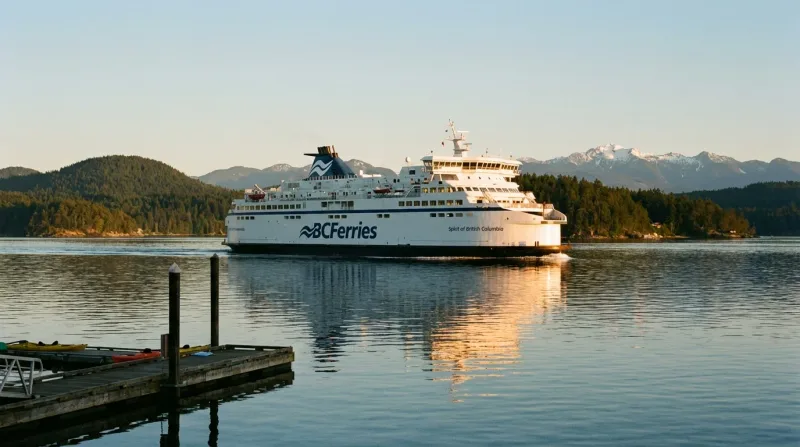
Greater Victoria's benchmark single-family home price is $1,134,600 as of January 2026 — approximately 43% below Metro Vancouver's benchmark of $1,997,400. For Vancouverites who can work remotely or are retiring, that gap often makes the difference between ownership and renting indefinitely. The BC Ferries crossing from Tsawwassen to Swartz Bay takes 1.5 hours sailing, roughly 3 to 3.5 hours door to door. For full January 2026 market data, see our Victoria real estate market report.
The Price Gap: Vancouver vs Victoria (2026)
The headline differential is 43% lower board-wide SFH benchmark. For buyers priced out of Metro Vancouver, Greater Victoria offers detached home ownership at prices comparable to Burnaby or Coquitlam — but with a fundamentally different lifestyle.
| Area | SFH Benchmark | vs Metro Vancouver |
|---|---|---|
| Metro Vancouver (REBGV) | $1,997,400 | — |
| Greater Victoria (board-wide) | $1,134,600 | −43% |
| Oak Bay | $1,707,500 | −15% |
| North Saanich | $1,486,300 | −26% |
| Saanich East | $1,272,700 | −36% |
| Victoria (city) | $1,178,200 | −41% |
| Central Saanich | $1,156,700 | −42% |
| Colwood | $1,100,000 | −45% |
| Esquimalt | $1,075,500 | −46% |
| Saanich West | $1,073,400 | −46% |
| View Royal | $1,067,000 | −47% |
| Langford | $1,034,400 | −48% |
| Sidney | $1,013,200 | −49% |
| Sooke | $816,400 | −59% |
| Gulf Islands | $719,500 | −64% |
Victoria benchmark prices: VREB January 2026 stats. Metro Vancouver benchmark: REBGV January 2026 Market Report.
For condo buyers the gap is similar. First time buyers can claim an exemption on a home with a fair market value up to $835,000. It removes the tax on the first $500,000 of the price, a saving of up to $8,000, and it tapers to nothing between $835,000 and $860,000. Newly built homes have a separate, larger exemption.
Vancouver Neighbourhood Equivalents
The most common question from Vancouver transplants is “where in Victoria is like where I live now?” Here's the honest mapping.
| If you lived in… | Look at in Victoria | Why |
|---|---|---|
| Kitsilano | Fairfield | Walkable, heritage homes, café culture, near water |
| Commercial Drive | Fernwood / Cook St Village | Independent shops, community feel, character homes |
| West Vancouver | Oak Bay | Established wealth, quiet streets, ocean proximity |
| Burnaby (family) | Saanich East | Good schools, detached homes, suburban feel |
| New Westminster | Esquimalt / View Royal | Affordable, improving, close to downtown |
| Langley / Surrey | Langford / Colwood | New builds, family-oriented, highway access |
| White Rock | Sidney / North Saanich | Ocean town feel, quieter pace, older demographic |
| Coquitlam | Saanich West | Mid-range, practical, good transit access |
This is a lifestyle match, not a price match. Oak Bay is actually one of Vancouver Island's most expensive areas — comparable per-sqft to parts of West Vancouver. If you're coming from Kitsilano expecting Fairfield to be cheap, adjust your expectations: it's cheaper than Kits, but it's still Victoria's most in-demand walkable neighbourhood.
The Ferry Reality
The Tsawwassen–Swartz Bay route is the main crossing for vehicle travel — 1.5 hours sailing, roughly 45 minutes driving on each end. Expect 3–3.5 hours door to door without a booking on a weekday. Summer weekends and long weekends require advance reservations. BC Ferries Tsawwassen–Swartz Bay schedules and fares.
For remote workers making occasional trips to Vancouver, the floatplane is the faster option. Harbour Air flies Coal Harbour to Victoria Inner Harbour in 35 minutes. Fares are typically around $120 CAD one way, with occasional sale fares lower. Helijet offers helicopter service on the same route as an alternative.
For the full breakdown of routes, booking strategy, and wait time patterns, see our Moving to Vancouver Island guide.
Victoria vs Vancouver: What's Actually Different
Pace: Noticeably slower. Most Vancouverites report this as a feature within 6 months.
Weather: Similar annual rainfall, but Victoria averages the most sunshine hours of any city in BC and sees far less snow than Metro Vancouver.
Size: Greater Victoria metro is approximately 400,000 people. You will run into people you know — the social graph is tighter.
Driving: Most errands outside central Victoria require a car. BC Transit is improving but not Vancouver-level frequency or coverage.
Food & Culture: Strong restaurant scene for the city's size, with excellent access to local farms and Vancouver Island seafood. Less ethnic food diversity than Metro Vancouver.
Career: Remote work has transformed the calculus for many. Victoria's local job market is anchored by government, tech, tourism, and healthcare — plan carefully if your career depends on Metro Vancouver employers.