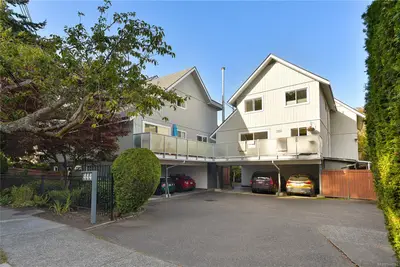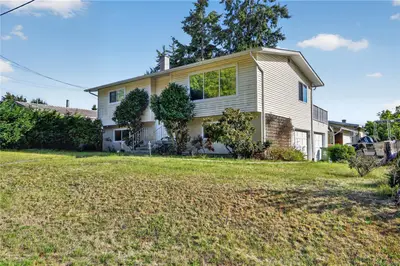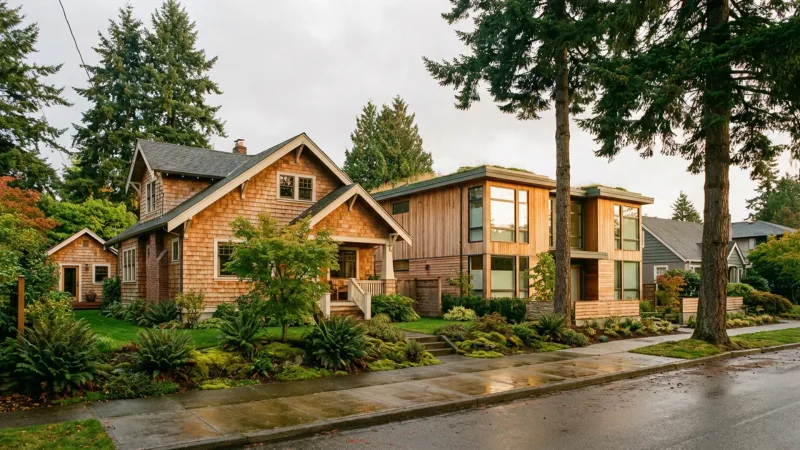
What Is SSMUH?
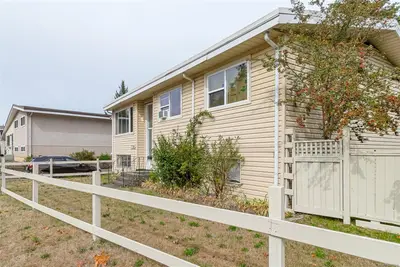
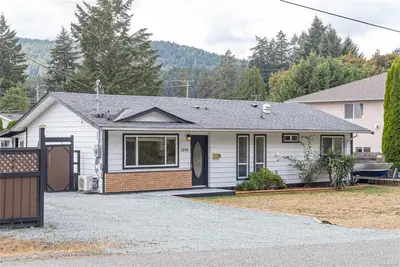
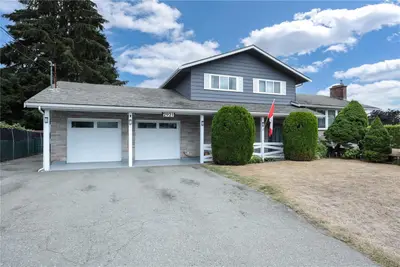
Small Scale Multi-Unit Housing (SSMUH) is British Columbia's provincial framework for allowing gentle density on residential lots that were previously restricted to a single detached house. Introduced under Bill 44 (the Housing Statutes Amendment Act), SSMUH requires every municipality in BC to update its zoning bylaws to permit multiple housing units on single-family and duplex-zoned lots, without requiring the property owner to go through a rezoning process. In Greater Victoria, this means most residential lots now permit three or four units by right, and six on a qualifying lot near a prescribed bus stop in the municipalities that have identified one
The practical effect is significant: if you own a single-family lot in Greater Victoria, you likely have the right to build a secondary suite, a garden suite, a duplex, a triplex, or even a fourplex, depending on your lot size and location. This represents the most substantial change to residential zoning in BC history.
SSMUH is not a single building type. It is a category of housing that includes secondary suites (basement or in-home suites), detached garden suites (also called laneway houses, carriage houses, or backyard cottages), duplexes, triplexes, fourplexes, and in some cases townhouse-style configurations. The term “small scale” distinguishes these projects from larger apartment buildings, which fall under different zoning and development frameworks.
How Bill 44 Changed the Rules
Before Bill 44 received Royal Assent in November 2023, building anything beyond a single-family home on a residentially-zoned lot in most Greater Victoria municipalities required a rezoning application. Rezoning meant public hearings, neighbourhood consultation, months (or years) of processing, and no guarantee of approval. This created a de facto barrier to gentle density, even when market demand and municipal housing targets called for more supply.
Bill 44 changed this by requiring municipalities to pre-zone for SSMUH. The key provisions include:
- Municipalities must allow at least one secondary suite or one additional dwelling unit on all single-family zoned lots.
- A lot of 280 square metres or less must permit up to three units.
- A lot larger than 280 square metres must permit up to four units.
- A lot of 281 square metres or more within 400 metres of a prescribed bus stop must permit up to six units, in a municipality with a population over 5,000. A prescribed bus stop is defined by service frequency in provincial regulation, not by a municipality choosing one, and only some municipalities have identified any.
- Municipalities cannot require a public hearing or rezoning for projects that comply with SSMUH standards.
- Municipalities may still regulate building form, setbacks, height, and lot coverage, but they cannot use those regulations to effectively prohibit the permitted number of units.
The legislation also required municipalities within urban containment boundaries to update their Official Community Plans (OCPs) and zoning bylaws by June 30, 2024. Some municipalities met this deadline; others are still refining their bylaws, but the provincial framework applies regardless.
Bill 25 Update (November 2025): What Changed
New compliance deadline: June 30, 2026
All affected municipalities must update their zoning bylaws to comply with Bill 25 by June 30, 2026. This includes Victoria, Saanich, Langford, Oak Bay, Colwood, View Royal, Esquimalt, Central Saanich, and North Saanich.
In November 2025, the BC Legislature passed Bill 25 — the Housing and Municipal Affairs Statutes Amendment Act — which clarified and tightened the original Bill 44 SSMUH framework. Two changes directly affect Vancouver Island property owners:
1. Restricted zone redefined
Under the original Bill 44, some municipalities argued that lots already allowing three units (a principal dwelling plus secondary suite plus coach house) fell outside the full SSMUH density requirements. Bill 25 closed this loophole. The definition of a “restricted zone” now includes any zone that permits a single detached home with a secondary suite and detached accessory dwelling unit. These lots must now permit the full 4–6 unit density required under SSMUH — not just three.
2. June 30, 2026 compliance deadline
Municipalities that had not fully updated their zoning bylaws under Bill 44 — or whose bylaws used the old “three unit” interpretation — must now comply with the updated requirements by June 30, 2026. The provincial framework applies regardless of whether your municipality has passed updated bylaws. If a municipality misses the deadline, the province can impose a ministerial order overriding local zoning.
What You Can Build (by Lot Size)
The number of units you can build depends primarily on your lot area. Here is a general breakdown based on the provincial framework:
Small lots, 280 square metres or less
On a qualifying lot of 280 square metres or less the framework requires up to three units, not merely a secondary suite. The one additional unit rule is the lower obligation that applies to land the tiers do not reach, such as a lot outside the urban containment boundary in a municipality under 5,000 population, or a lot without both municipal water and sewer. This could be a basement suite, an above-garage suite, or another in-home suite configuration. Garden suites may not be feasible on very small lots due to setback and lot coverage constraints.
Standard lots, larger than 280 square metres
This is where most Greater Victoria lots fall. On a lot larger than 280 square metres, you can build up to four housing units. Common configurations include:
- A fourplex (4 units in one building).
- A triplex with a garden suite.
- A single-family home with a secondary suite and a detached garden suite, plus an additional unit.
- Two duplexes (where municipal bylaws allow).
The specific form, whether you attach or detach the units, is governed by municipal bylaws, which vary. Some municipalities are more permissive about detached configurations; others prefer attached buildings to manage site coverage.
Near a prescribed bus stop, 281 square metres or more
A lot of 281 square metres or more within 400 metres of a prescribed bus stop may qualify for up to six units, but only where such a stop exists. The provincial test is a service frequency standard, roughly a bus at least every fifteen minutes on average from 7 a.m. to 7 p.m. on weekdays and from 10 a.m. to 6 p.m. at weekends. In Greater Victoria only Saanich, Langford and View Royal have identified qualifying stops and mapped the parcels around them. Check your own address against the municipality's map before you rely on six units. This higher density tier is designed to concentrate housing near the transit infrastructure that supports it. Options include:
- A sixplex (6 units in one building).
- A fourplex with two garden suites.
- Multiple smaller buildings totalling six units, where the municipality's own limit on the number of buildings on a lot allows it.
Large lots near designated transit exchanges may qualify for even higher density under Bill 47 (TOA legislation), which is a separate framework allowing mid-rise buildings of up to 10 storeys.
To understand your specific development potential, it is important to know your exact lot size, current zoning designation, and location relative to transit corridors and municipal boundaries.
Check your lot's development potential
Use the free Development Potential tool to see what SSMUH options may apply to your specific property in Greater Victoria.
Check Your LotSources: SSMUH Provincial Policy Manual and Site Standards, Local Government Zoning Bylaw Regulation, B.C. Reg. 262/2023
Municipality-Specific Rules
While Bill 44 sets the floor for what municipalities must allow, each municipality in Greater Victoria has adopted its own specific bylaws, design guidelines, and development standards. Here is an overview of the major municipalities:
City of Victoria
Victoria was among the first municipalities in BC to embrace gentle density, and its SSMUH implementation reflects years of policy groundwork. The city adopted its updated zoning bylaws ahead of the June 2024 provincial deadline, building on its existing Missing Middle Housing Initiative that had already introduced houseplex zoning in several neighbourhoods.
Under Victoria's current bylaws, houseplexes of up to six units are permitted on lots in the Traditional Residential (R1-B) and related zones, particularly near village centres and major corridors identified in the Official Community Plan.
Those house plex permissions are Victoria's own, they predate Bill 44, and they carry no transit condition. They are a different route to six units and should not be confused with the provincial transit tier.
On a standard residential lot larger than 280 square metres, most Victoria lots being 550 to 700 square metres, up to four units are permitted as of right. On a lot of 280 square metres or less, up to three units are permitted. Victoria's zoning bylaw also carries the six unit tier for a lot within 400 metres of a prescribed bus stop, but it defines that term only by pointing at the provincial standard and the City publishes no list or map of qualifying stops, so confirm with the City rather than assuming.
Garden suites in Victoria may be up to 70 square metres in floor area, with a maximum height of 7.6 metres (two storeys). Side and rear setbacks for garden suites are reduced to 1.5 metres, making them feasible on narrower lots. The city does not require the property owner to live on-site, which means both the principal dwelling and the garden suite can be rented.
Victoria offers free pre-application consultations for SSMUH projects and has published design guides with pre-approved floor plans for garden suites. Building permit processing for straightforward SSMUH applications typically takes 8 to 12 weeks. The city has waived public notification requirements for SSMUH projects that comply with the zoning bylaw.
- Development Cost Charges (DCCs) apply per new unit, typically $10,000 to $15,000 depending on the area and unit type.
- Heritage Conservation Areas (such as parts of Fernwood, James Bay, and Gonzales) may impose additional design review for exterior alterations visible from the street.
- Properties within 400 metres of a frequent transit route may have reduced or eliminated parking requirements under the city's parking bylaw.
- Victoria's lot coverage maximums range from 40% to 50% depending on the zone, which can constrain footprint options on smaller lots.
Sources: Victoria Zoning Regulation Bylaw 80-159, general regulations
District of Saanich
Saanich is the largest municipality by land area in the Capital Regional District and contains a wide variety of lot sizes, from compact urban lots in Quadra-Hillside to multi-acre rural properties in Prospect Lake and Cordova Bay. The district adopted its SSMUH zoning amendments in alignment with Bill 44 requirements, permitting up to four units on a residential lot larger than 280 square metres, and up to three units on a lot of 280 square metres or less. Saanich is one of the few municipalities that has actually defined and mapped the six unit tier: its zoning bylaw defines an SSMUH Bus Stop by the provincial frequency standard and an SSMUH Transit Proximity Area as the land within 400 metres of one, and a lot of 280 square metres or more inside that area permits six units. The area is shown on SaanichMap. Saanich warns that some corridors that look eligible are not, and names Quadra Street specifically, because routes 6A and 6B are separate variants and that split disqualifies the route.
Garden suites in Saanich are permitted up to 90 square metres in floor area, with a maximum building height of 7.5 metres (two storeys). Minimum setbacks are 1.5 metres from side and rear lot lines, though lots adjacent to Agricultural Land Reserve (ALR) parcels may require larger buffers. Saanich requires that the garden suite be architecturally compatible with the existing neighbourhood character, which in practice means review of rooflines, exterior cladding, and window placement.
Sewer servicing is a critical consideration in Saanich. The municipality is divided into sewered and unsewered areas. In sewered areas, all new dwelling units must connect to the municipal sewer system. In unsewered areas (parts of Gordon Head, Broadmead, Cadboro Bay, and rural Saanich), additional units may require an upgraded septic system or connection to the nearest sewer main, which can add $30,000 to $80,000 to project costs depending on distance and terrain.
Saanich's building permit processing times for SSMUH projects average 10 to 14 weeks. The district requires a geotechnical report for lots with slopes exceeding 20%, which affects many properties in areas like Mount Tolmie, Mount Douglas, and Christmas Hill. Development Cost Charges in Saanich are assessed per additional unit and vary by DCC area, ranging from approximately $12,000 to $20,000 per unit. The district also requires tree protection plans where significant trees exist on the development site.
Sources: Saanich Zoning Bylaw 8200, Saanich SSMUH Application Guide
City of Langford
Langford has consistently been one of the most development-friendly municipalities in the Capital Regional District. The city had already permitted secondary suites and garden suites on most residential lots before Bill 44, and its SSMUH bylaw updates were adopted swiftly. Langford's approach prioritizes housing supply and streamlined approvals, making it one of the easiest jurisdictions in Greater Victoria for SSMUH projects.
On a standard residential lot larger than 280 square metres, most falling between 500 and 800 square metres, Langford permits up to four units as of right. On a lot of 280 square metres or less, up to three units are permitted. Langford has mapped its six unit tier: a lot between 281 and 4,047 square metres within 400 metres of a prescribed transit stop shown on Schedule AA of the zoning bylaw permits up to six units. Note the upper limit, because a lot larger than 4,047 square metres falls outside the tier rather than above it.
The transit oriented area around the Langford Exchange is a separate framework under Bill 47. It allows far more than six units, up to 3.5 floor space ratio and 10 storeys within 200 metres, but a lot inside it is excluded from the small scale tiers and that density still requires a rezoning.
Garden suites in Langford are permitted up to 90 square metres, with a maximum height of 7.5 metres. Minimum setbacks are 1.5 metres from side and rear property lines. The city does not impose owner-occupancy requirements, allowing both the primary dwelling and garden suite to be rented. Langford also permits secondary suites in conjunction with garden suites on lots that meet the unit count thresholds.
Langford's building permit turnaround is among the fastest in the region, with straightforward SSMUH applications typically processed in 6 to 10 weeks. The city's Development Cost Charges are structured to encourage SSMUH, with DCCs for secondary suites and garden suites set lower than for principal dwelling units. Typical DCCs range from $8,000 to $14,000 per additional unit.
- Langford requires all new units to connect to municipal water and sewer. The city is fully serviced, so septic conversion is not typically an issue.
- Properties near Bear Mountain and in the Highlands border area may have steeper terrain requiring geotechnical reports.
- Langford does not impose heritage design review requirements, giving homeowners more flexibility in architectural style.
- The city has published template designs for garden suites that can expedite the design and approval process.
Sources: Langford Zoning Bylaw Amendment Bylaw 2183, including Schedule AA
City of Colwood
Colwood adopted its SSMUH zoning amendments in compliance with the provincial Bill 44 timeline. The city permits up to four units on a residential lot larger than 280 square metres, and up to three units on a lot of 280 square metres or less, consistent with the provincial framework.
Garden suites in Colwood are permitted up to 80 square metres in floor area, with a maximum height of 7.5 metres. The city requires a minimum 1.5-metre setback from side and rear lot lines and requires that garden suites have a separate entrance that does not face the front street unless no other practical orientation exists. Secondary suites must also have a dedicated entrance separate from the principal dwelling's main entrance.
Colwood has its own designated transit exchange under TOA legislation, and properties within 400 metres also fall within the Transit-Oriented Area catchment. Properties within 200 metres of the Colwood Exchange may qualify for up to 10 storeys, and properties between 200 and 400 metres may qualify for up to 6 storeys. Homeowners near Colwood Corners, Royal Bay, and areas along the Galloping Goose Trail corridor should verify their TOA status with the city's planning department, as this can significantly affect what is buildable.
The city requires all new dwelling units to connect to municipal sewer and water services. Most of Colwood is fully serviced, though some older properties in the Wishart and Hatley Park areas may require sewer connection upgrades. Development Cost Charges in Colwood typically range from $10,000 to $16,000 per additional unit. Building permit processing for SSMUH applications averages 10 to 14 weeks.
- Colwood's design guidelines require that new construction be visually compatible with the existing streetscape, though the standards are less prescriptive than those in Oak Bay or Victoria's heritage areas.
- Royal Roads University lands and adjacent properties may have environmental development permit area restrictions that affect buildable area.
- The city has identified Colwood Corners as a priority growth area, and SSMUH projects in this vicinity may benefit from faster processing.
Township of Esquimalt
Esquimalt adopted its SSMUH bylaw amendments to comply with Bill 44, permitting up to four units on a residential lot larger than 280 square metres, and up to three units on a lot of 280 square metres or less. The township's compact geography and predominantly urban character make most residential lots eligible for SSMUH development. Check with Esquimalt's planning department to confirm which bus stops qualify as frequent transit under the provincial framework.
Garden suites in Esquimalt are permitted up to 75 square metres in floor area, with a maximum height of 7.5 metres (two storeys). Minimum setbacks are 1.5 metres from side and rear lot lines, and the township requires that garden suites maintain a minimum 3-metre separation from the principal dwelling to satisfy fire code requirements. Lot coverage maximums in Esquimalt's residential zones typically range from 40% to 45%, which can limit footprint options on smaller lots (many Esquimalt lots are 500 to 600 square metres).
Esquimalt has introduced a simplified permitting pathway for SSMUH projects that use pre-approved design templates. These templates cover common garden suite and secondary suite configurations and can reduce permit review times from the standard 10 to 14 weeks to approximately 6 to 8 weeks. The township encourages pre-application meetings with the planning department, which are available at no cost.
The township is fully serviced by municipal water and sewer, so septic systems are not a factor. Development Cost Charges are assessed per additional unit, typically in the range of $10,000 to $14,000. Esquimalt's design guidelines address building massing, roof pitch, and exterior materials to ensure new construction is compatible with the existing neighbourhood character, particularly in the heritage-rich areas around Old Esquimalt and Saxe Point.
- Properties near CFB Esquimalt and the naval dockyard may be subject to federal land use considerations that do not apply to typical residential lots.
- Esquimalt has no designated transit oriented area under Bill 47 and no provincially recognized transit stop, so there is no six unit tier anywhere in the Township. A lot qualifies for the three or four unit tiers only if it is shown on the Township's zoning overlay map and is not a tsunami hazard lot. The E&N Rail Trail corridor provides good cycling and pedestrian connectivity.
- Most lots in Esquimalt are above the 280 square metre threshold, making four-unit development widely eligible across the township.
District of Oak Bay
Oak Bay implemented its SSMUH bylaws as required under Bill 44, permitting secondary suites and garden suites on residential lots. The district has taken a measured approach to SSMUH, placing significant emphasis on design standards that maintain the established character of Oak Bay's neighbourhoods, which are among the most architecturally distinct in Greater Victoria.
Oak Bay went further than the provincial minimum in one respect and stopped short in another. In June 2024 Council applied up to four units to every residential lot in the District, including the Uplands, on a lot larger than 280 square metres, with three units on a lot of 280 square metres or less. A heritage designated lot is held to two units unless a Heritage Revitalization Agreement increases it.
There is no six unit tier in Oak Bay. The District's zoning bylaw caps density at four units and says nothing about transit proximity at all. An Uplands project also needs a separate siting and design approval from Council.
Garden suites are permitted up to 70 square metres in floor area, with a maximum height of 7.5 metres. The district requires minimum setbacks of 2.0 metres from side lot lines and 2.5 metres from the rear lot line, which are slightly more restrictive than some neighbouring municipalities.
Oak Bay's design guidelines for SSMUH projects are among the most detailed in the region. The district requires that new construction, including garden suites, be compatible with the architectural character of the surrounding neighbourhood. This includes requirements for roof pitch, exterior cladding materials (wood siding, stone, or stucco are preferred; vinyl siding is discouraged), window proportions, and landscape screening. Properties in the Uplands area are subject to additional restrictive covenants that predate municipal zoning and may further constrain what can be built.
Building permit processing in Oak Bay for SSMUH applications typically takes 12 to 16 weeks due to the design review component. The district processes all SSMUH applications through its standard building permit pathway and does not currently offer pre-approved design templates. Development Cost Charges range from approximately $12,000 to $18,000 per additional unit.
- Oak Bay is fully serviced by municipal sewer and water.
- Significant tree protection bylaws apply, and removal of mature Garry oak trees requires special approval.
- Oak Bay does not have a designated Transit-Oriented Area under Bill 47.
- The Uplands neighbourhood has heritage landscape covenants registered on title that may limit building placement and tree removal beyond what the zoning bylaw requires.
- Parking requirements in Oak Bay are one off-street space per dwelling unit, with no reductions for transit proximity.
There is a full post on what a covenant or building scheme does to your density.
Sources: Oak Bay Infill Housing How To Guide
Town of View Royal
View Royal adopted its SSMUH bylaw amendments to comply with Bill 44, permitting up to four units on a residential lot larger than 280 square metres, and up to three units on a lot of 280 square metres or less. View Royal has mapped its six unit tier and counted the stops: there are six prescribed frequent transit stops in the Town, four on Island Highway and two on Helmcken Road, identified and confirmed by the Province and BC Transit. A parcel of at least 280 square metres and less than 4,050 square metres within 400 metres of one of them permits up to six units, as shown on the map in the zoning bylaw. View Royal's geography includes both urban areas along the Old Island Highway corridor and more rural, sloped terrain near Thetis Lake and the Highlands border.
Garden suites in View Royal are permitted up to 80 square metres in floor area, with a maximum height of 7.5 metres and minimum setbacks of 1.5 metres from side and rear lot lines. The town requires that garden suites maintain a minimum 3-metre separation from the principal dwelling. On lots with significant grade changes, the town may require stepped foundations or retaining walls, which adds to construction costs.
Servicing is a key consideration in View Royal. While most of the urban core along the highway corridor is connected to municipal sewer, some properties in the western and northern parts of the town remain on septic systems. New dwelling units on unsewered lots must either connect to the nearest sewer main or demonstrate that the existing septic system can handle additional capacity, which typically requires a septic assessment by a registered onsite wastewater practitioner. Sewer connection costs in View Royal can range from $25,000 to $60,000 depending on distance and terrain.
View Royal requires geotechnical assessments on lots with slopes exceeding 15%, which affects a significant number of properties. Building permit processing for SSMUH projects averages 10 to 14 weeks. Development Cost Charges are assessed per additional unit, typically $10,000 to $15,000.
- Properties near the Galloping Goose Trail and the E&N Rail Trail benefit from good cycling and pedestrian connectivity. View Royal's zoning bylaw also carries a transit oriented area designation, but that schedule does one thing only, it removes residential parking minimums. It sets no density and it is a different map from the six unit map.
- Thetis Lake Regional Park and its surrounding environmental buffer may impose development permit area restrictions on nearby lots.
- View Royal's design guidelines are moderate, requiring general architectural compatibility but without the prescriptive material and style requirements found in Oak Bay.
Sources: View Royal Zoning Bylaw 900, View Royal SSMUH map
District of Central Saanich
Central Saanich occupies the middle of the Saanich Peninsula and presents a distinct SSMUH context due to its mix of urban residential areas (Brentwood Bay, Saanichton) and extensive Agricultural Land Reserve (ALR) holdings. The district adopted its SSMUH bylaw amendments to comply with Bill 44, but the practical application varies significantly depending on whether a lot is within the urban containment boundary or in a rural or ALR-designated area.
Central Saanich replaced its residential zones with two new ones. The Residential Neighbourhood zone covers most land inside the urban containment boundary and permits three units on a lot of 280 square metres or less and four above that. The Residential Corridor zone, which follows the Main Corridor designation in the Official Community Plan, goes well beyond the provincial minimum on lot size alone: three units at 280 square metres or less, four above 280 to 800, six above 800 to 1,200, and eight above 1,200.
Those six units have nothing to do with transit. The District's zoning bylaw does not mention transit anywhere. Six units in Central Saanich is a lot size permission of the District's own making, which means a corridor lot can reach six without being near any bus stop, and a lot in the Residential Neighbourhood zone cannot reach six however close a stop happens to be.
Two limits bite before the unit count does. The number of residential buildings on a lot is capped at two in the Residential Corridor zone, and in the Residential Neighbourhood zone a lot of 280 square metres or less permits one building and a larger lot two. And any property not connected to both municipal water and sanitary sewer is limited to one principal dwelling and one accessory dwelling unit.
Garden suites are permitted up to 80 square metres in floor area, with a maximum height of 7.5 metres and setbacks of 1.5 metres from side and rear lot lines. The district requires that garden suites maintain architectural compatibility with the surrounding neighbourhood.
Properties within the Agricultural Land Reserve are subject to additional restrictions. Under the Agricultural Land Commission Act, ALR lots may build a principal residence and one secondary suite, but additional units such as garden suites or triplexes are generally not permitted on ALR land unless the ALC grants specific approval. This means that many of Central Saanich's larger rural lots, despite meeting the 280 square metre threshold, cannot take full advantage of SSMUH provisions due to ALR restrictions.
Sewer servicing in Central Saanich is split. The Brentwood Bay and Saanichton areas are generally connected to municipal sewer, but many rural properties rely on septic systems. New dwelling units on unsewered lots require a septic assessment, and the district may require connection to municipal sewer if a main is available within a defined distance. Development Cost Charges range from approximately $12,000 to $18,000 per unit. Building permit processing times average 12 to 16 weeks.
- Central Saanich does not have a designated Transit-Oriented Area under Bill 47.
- Lots on the eastern slopes toward the Saanich Inlet may require geotechnical assessments due to steep terrain.
- The district has tree protection bylaws that require permits for removing trees over a specified caliper on development sites.
Sources: Central Saanich Zoning Bylaw 2180, consolidated
District of North Saanich
North Saanich is a predominantly rural municipality at the northern tip of the Saanich Peninsula. The district has no land inside the urban containment boundary established by the Capital Regional District, so the three to six unit density tiers do not apply there.
Practical constraints include the prevalence of Agricultural Land Reserve (ALR) land throughout the district, the absence of municipal sewer infrastructure on most properties, and lot sizes that are generally much larger than urban residential lots. Properties in North Saanich rely on private septic systems, which limits the number of dwelling units any given lot can support. On ALR land, the Agricultural Land Commission restricts additional dwellings to one secondary suite within the principal residence.
If you own property in North Saanich and are interested in adding a secondary suite or exploring other housing options, contact the North Saanich planning department directly. Some housing options may still be available under existing bylaws, but the SSMUH framework described in this guide does not apply.
Town of Sidney
Sidney is a compact, fully urban municipality on the Saanich Peninsula with a well-defined town centre and established residential neighbourhoods. The town adopted its SSMUH bylaw amendments to comply with Bill 44, and its urban character makes most residential lots straightforward candidates for SSMUH development.
Sidney permits up to four units on a residential lot larger than 280 square metres, and up to three units on a lot of 280 square metres or less. Four is the ceiling. Sidney's zoning bylaw has no six unit tier and makes no reference to transit proximity anywhere. Most residential lots in Sidney fall in the 500 to 700 square metre range, making them eligible for up to four units under SSMUH. Garden suites are permitted up to 75 square metres in floor area, with a maximum height of 7.5 metres and minimum setbacks of 1.5 metres from side and rear lot lines.
Sidney is fully serviced by municipal sewer and water, which eliminates the septic constraints that affect neighbouring North Saanich. All new dwelling units must connect to the municipal sewer system. The town's relatively flat terrain means geotechnical assessments are rarely required, which reduces pre-construction costs compared to hillier municipalities.
Sidney has no designated transit oriented area under Bill 47, and its zoning bylaw caps small scale density at four units. The town centre has reasonably frequent bus service along the Pat Bay Highway corridor. The Victoria International Airport is located immediately adjacent to Sidney, and the BC Ferries Swartz Bay terminal is a short distance north.
- Building permit processing in Sidney averages 10 to 14 weeks for standard SSMUH applications.
- Development Cost Charges typically range from $10,000 to $14,000 per additional unit.
- Sidney's design guidelines require general architectural compatibility with the existing streetscape but are less prescriptive than Oak Bay's requirements.
- Properties near the Sidney waterfront may be within a development permit area for coastal flooding or sea-level rise, which can affect building placement and foundation design.
- The town has a small number of heritage properties in the downtown core that may face additional design review for visible alterations.
Sources: Sidney Zoning Bylaw 2275
District of Metchosin
Metchosin is a rural municipality on the southern tip of the West Shore, known for its large lots, agricultural heritage, and commitment to preserving rural character. Like North Saanich, Metchosin does not have designated SSMUH areas because it falls outside the urban containment boundary. Bill 44's mandatory pre-zoning for multi-unit housing does not apply to Metchosin.
The district has no municipal sewer system, all properties rely on private septic systems, which is the single largest practical constraint on adding dwelling units. A significant portion of Metchosin is within the Agricultural Land Reserve, further limiting development options. On ALR land, the Agricultural Land Commission restricts additional dwellings to one secondary suite within the principal residence.
Homeowners in Metchosin who are interested in adding a secondary suite or exploring other housing options should contact the Metchosin planning department. Some options may be available under existing bylaws, but the SSMUH density provisions described in this guide do not apply to properties in Metchosin.
Garden Suites & Secondary Suites
Garden suites and secondary suites are the most common entry points for homeowners exploring SSMUH. Understanding the distinction is important:
Secondary suites
A secondary suite is a self-contained dwelling unit located within the principal building (usually a house). Common configurations include basement suites, above-garage suites, and suites created by converting part of an upper floor. Secondary suites must meet BC Building Code requirements for separate entrance, fire separation, egress windows, smoke alarms, and ceiling heights. Converting an existing space to a legal secondary suite typically costs $80,000 to $150,000 depending on the scope of work.
Garden suites
A garden suite is a detached, self-contained dwelling unit on the same lot as the principal building. Garden suites are sometimes called laneway houses, carriage houses, backyard cottages, or accessory dwelling units (ADUs). Under SSMUH, garden suites are typically limited to 70 to 90 square metres of floor area, with maximum heights of 7.5 to 9 metres (depending on the municipality) and minimum setbacks of 1.5 to 3 metres from property lines.
Building a new garden suite in Greater Victoria typically costs $200,000 to $400,000 for a one- or two-bedroom unit, including design, permits, servicing, and construction. Pre-fabricated or modular garden suites can sometimes reduce costs, but site preparation, foundation, and servicing costs remain significant.
Water and sewer considerations
One of the most important practical considerations for secondary and garden suites is water and sewer servicing. Most Greater Victoria municipalities require new suites to be connected to municipal sewer. If your property currently relies on a septic system, you may need to connect to the municipal sewer network before building an additional unit, which can add $20,000 to $80,000 or more depending on the distance to the nearest connection point.
Parking Under SSMUH
Parking requirements have historically been one of the biggest barriers to building additional housing units on residential lots. Under SSMUH, the province has significantly reduced what municipalities can require:
- Municipalities generally cannot require more than one off-street parking space per dwelling unit for SSMUH projects.
- For properties within 400 metres of a frequent transit route (a bus route with service at least every 15 minutes during peak hours), parking requirements may be reduced to 0.5 spaces per unit or eliminated entirely.
- Tandem parking (one car behind another in a single driveway) is generally acceptable to meet parking requirements.
- Municipalities cannot require covered or garage parking for SSMUH units.
Reduced parking requirements are one of the most significant practical benefits of SSMUH. On a typical 600-square-metre lot, traditional parking requirements for a fourplex could consume enough space to make the project physically impossible. Under SSMUH, the same lot can accommodate four units with a combination of driveway and on-street parking.
Development Costs & Timelines
Understanding the full cost of an SSMUH project is critical for making informed decisions. Here is a breakdown of the major cost categories:
Soft costs (design and permits)
Architectural and engineering design fees typically run $15,000 to $50,000 depending on the complexity of the project. Building permit fees vary by municipality but generally range from $5,000 to $15,000 per unit. Development Cost Charges (DCCs) are municipal fees that fund infrastructure upgrades and typically range from $10,000 to $40,000 per new unit. Some municipalities offer DCC waivers or reductions for affordable housing or rental housing projects. If you plan to rent out units, understanding BC tenancy rules for secondary suite landlords is essential for budgeting and compliance.
Hard costs (construction)
Construction costs in Greater Victoria generally range from $300 to $500 per square foot for new residential construction, depending on quality of finishes, site conditions, and market conditions. A 900-square-foot garden suite might cost $270,000 to $450,000 to build. A fourplex of 4,000 total square feet might cost $1.2 million to $2.0 million.
Servicing costs
Connecting additional units to water, sewer, and storm drainage infrastructure can cost $30,000 to $100,000 or more, depending on existing connections and municipal requirements. Electrical service upgrades are also common, particularly for properties adding multiple units, and can cost $5,000 to $20,000.
Timeline
A realistic timeline for an SSMUH project from initial planning to occupancy is 12 to 24 months. This includes 2 to 4 months for design and engineering, 2 to 4 months for building permit review, and 6 to 14 months for construction, depending on project scope. Delays are common, particularly during the permit review stage, so building a buffer into your timeline is advisable.
When to Hire Professionals
While SSMUH simplifies the regulatory pathway, the design and construction of multi-unit housing is not a do-it-yourself project. You will need professionals at several stages:
- Architect or building designer to produce construction drawings that meet the BC Building Code and municipal design requirements.
- Structural engineer to ensure the building can withstand seismic loads (critical in Greater Victoria, which is in a high seismic zone).
- Geotechnical engineer for lots with slopes, rock, high water tables, or other challenging soil conditions.
- BC land surveyor to confirm lot boundaries, setbacks, and any easements or rights-of-way before you start design.
- Civil engineer for stormwater management, sewer connections, and servicing design.
- General contractor with experience in multi-unit residential construction.
Engaging the right professionals early saves time and money. A pre-application consultation with your municipality is also strongly recommended before you invest in detailed design work. Many municipalities offer this service at no charge, and it can identify potential issues (like utility easements or tree protection requirements) before they become expensive problems.
For a detailed breakdown of the development consultants you may need and what each one does, see the Development Consultants Guide for BC.
For a municipality by municipality breakdown of what each council actually adopted, read Bill 44 in Greater Victoria: what each municipality actually adopted.
Frequently Asked Questions
What is SSMUH?
SSMUH stands for Small Scale Multi-Unit Housing. It is a provincial framework introduced under BC Bill 44 that requires municipalities to allow multiple housing units on lots that were previously zoned exclusively for single-family homes. The goal is to increase housing supply by enabling gentle density such as duplexes, triplexes, fourplexes, and secondary or garden suites without requiring a rezoning application.
How many units can I build on my lot under SSMUH?
It depends on lot size, servicing and location. A lot of 280 square metres or less permits three units. A lot larger than 280 square metres permits four. A lot of 281 square metres or more that sits within 400 metres of a prescribed frequent transit stop permits six, and that tier only applies in municipalities with a population over 5,000.
The tiers do not reach every lot. A lot is excluded if it is not connected to both municipal water and municipal sewer, if it is larger than 4,050 square metres, if its zone already sets a minimum lot size of 4,050 square metres or more, if it is protected heritage property, if it sits inside a designated transit oriented area, or if it carries a hazard that cannot be mitigated. In municipalities under 5,000 population, land outside the urban containment boundary is also excluded.
Local bylaws still control building form, setbacks, height, lot coverage and parking, and a covenant or building scheme on your title can cap the density regardless of what the zoning permits.
Can I build a garden suite under SSMUH?
Sometimes, but the legislation does not guarantee it. Bill 44 requires municipalities to permit a number of units on a qualifying lot. It does not require them to permit those units in a detached building, and it does not override how a municipality regulates building form.
That distinction decides real projects. Units are not buildings: several municipalities cap the number of buildings on a lot separately from the number of units. Servicing decides others: Central Saanich, for example, prohibits a second service connection from the municipal system to serve a detached accessory dwelling, which rules out a standalone suite on most lots there regardless of the unit count.
So the question is never only how many units your lot permits. It is how many buildings, in what form, and how a detached unit would be serviced. Confirm all three with your municipality before you design around a garden suite.
Sources: SSMUH Provincial Policy Manual and Site Standards, Central Saanich infill housing
How much does a garden suite cost in Greater Victoria?
A garden suite in Greater Victoria typically costs about $300 to $500 per square foot to construct, depending on its size, finishes, and site conditions. For a 900-square-foot suite, construction alone may cost approximately $270,000 to $450,000. Add roughly $30,000 to $80,000 for design, engineering, permits, Development Cost Charges, legal work, financing, and project management, plus any site-specific water, sewer, stormwater, or electrical upgrades. A realistic budget needs to be based on your lot and proposed design, because steep terrain, septic servicing, and difficult site access can add substantially to the total.
How long does SSMUH development take from start to finish?
A typical SSMUH project takes 12 to 24 months from initial planning to occupancy. The building permit process in most Greater Victoria municipalities takes 8 to 16 weeks for straightforward applications. Construction timelines range from 4 to 6 months for a simple garden suite to 10 to 14 months for a fourplex. Factor in additional time for design, engineering, and any required variances.
Which Greater Victoria municipalities have adopted SSMUH bylaws?
It depends on the municipality and on the individual property. Bill 44 sets different obligations depending on where a property sits. Municipalities with land inside the Capital Regional District urban containment boundary were required to permit the higher density tiers, up to four units on qualifying lots and up to six on qualifying lots near frequent transit. Municipalities with no land inside that boundary, and properties without community sewer servicing, fall under a lower requirement, which in some cases is already satisfied by permissions those municipalities had in place for secondary suites and accessory dwellings. So a rural municipality may still allow an additional unit even though the three to six unit tiers do not apply there. Because the answer turns on the individual parcel, check your own address with the development potential assessment rather than assuming your municipality's general rule applies to your lot.
Do I need to rezone my property to build SSMUH housing?
No. One of the key benefits of SSMUH is that qualifying projects do not require a rezoning application. If your lot meets the size and zoning criteria, you can apply directly for a building permit. This eliminates the public hearing process and significantly shortens approval timelines compared to traditional rezoning, which could take a year or more.
What is the difference between SSMUH and a Transit-Oriented Area (TOA)?
They are separate frameworks and they do not stack. Bill 44 sets the small scale tiers of three, four or six units on qualifying residential lots. Bill 47 designates transit oriented areas around specific exchanges, and inside one a lot is assessed under the transit oriented rules instead of the small scale tiers. The provincial policy manual is explicit that a parcel inside a designated transit oriented area is excluded from the small scale tiers, so you do not add one to the other.
In the capital region the designated exchanges are Colwood, Langford, Legislature, Royal Oak, Uptown, UVic and VGH. The radius is 400 metres, not 800. Within 200 metres of an exchange the framework allows up to 3.5 floor space ratio and 10 storeys, and from 200 to 400 metres up to 2.5 floor space ratio and six storeys.
The catch is that the transit oriented rules describe what a municipality must consider, not what you can build by right. That density still requires a rezoning application, with the process and timeline that comes with it. The small scale tiers do not.
Sources: SSMUH Provincial Policy Manual and Site Standards, Transit Oriented Areas designation, OIC 678-2023
What zoning changes has Bill 44 made in Victoria, Saanich and Oak Bay?
Bill 44 requires municipalities to pre zone residential land for small scale multi unit housing. A qualifying lot of 280 square metres or less permits three units, a lot larger than 280 square metres permits four, and a qualifying lot of 281 square metres or more within 400 metres of a prescribed frequent transit stop permits six.
Each municipality implemented that differently. Saanich gates eligibility three ways at once: a lot has to sit inside the Urban Containment Boundary, the Sewer Service Area and a Primary Growth Area, be under 4,050 square metres, and sit outside a designated transit oriented area. Oak Bay went further than the minimum, applying up to four units to every residential lot in the District including the Uplands, holding heritage designated lots to two units unless a Heritage Revitalization Agreement increases it, and requiring a separate siting and design approval from Council for an Uplands project.
Local bylaws still regulate building form, setbacks, height and lot coverage, but they cannot effectively prohibit the required units. A compliant project does not need a rezoning or a public hearing.
What is the minimum lot size for SSMUH in Greater Victoria?
There is no single minimum, and there is an upper limit people miss. A qualifying lot of 280 square metres or less permits three units. A lot larger than 280 square metres permits four. A qualifying lot of 281 square metres or more within 400 metres of a prescribed frequent transit stop permits six.
Above that, the tiers stop. A lot larger than 4,050 square metres is excluded, and so is a lot in a zone whose own minimum lot size is 4,050 square metres or more. A large rural parcel is often outside the framework entirely rather than at the top of it.
Your actual eligibility also depends on servicing, since a lot has to be connected to both municipal water and municipal sewer, and on the municipal standards for setbacks, height, lot coverage and parking.
What has changed for builders under Bill 44?
Before Bill 44, building anything beyond a single-family home on a residentially zoned lot in most Greater Victoria municipalities generally required a rezoning application, public hearings, neighbourhood consultation, and months or years of processing. Bill 44 requires municipalities to pre-zone for SSMUH, removes rezoning for projects that comply with the applicable zoning and Official Community Plan, and eliminates public hearings for OCP-consistent development. Builders must still follow municipal standards for building form, setbacks, height, lot coverage, and design.
Does SSMUH apply in Langford, Colwood and the rest of the Westshore?
The applicable SSMUH density depends on whether the individual property is inside the Capital Regional District urban containment boundary, its lot size, proximity to frequent transit, and whether community sewer service is available. The rules can therefore differ between nearby properties. Check the specific address with the development potential assessment instead of relying on a municipality-wide assumption.