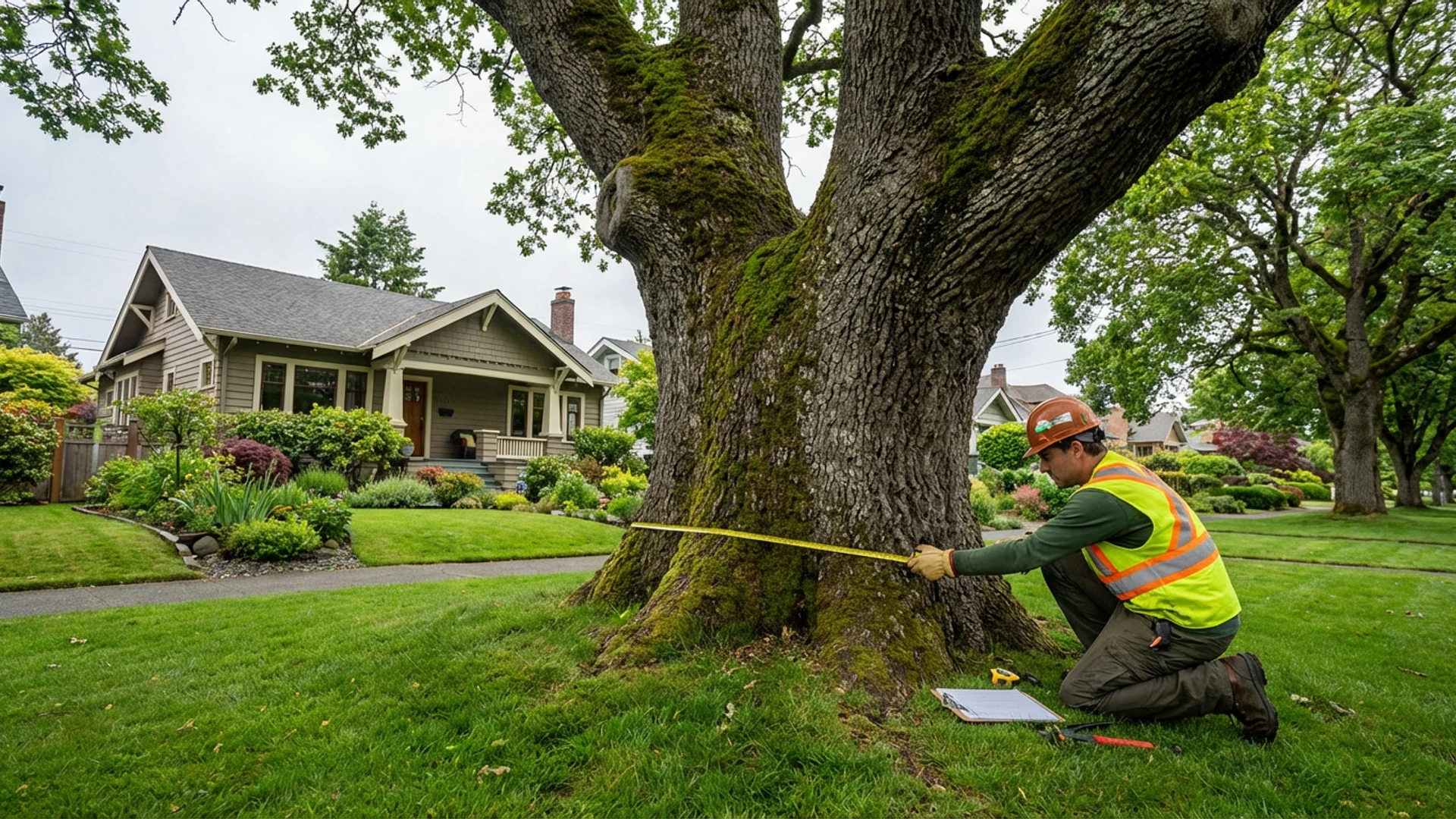
On Vancouver Island, trees are regulated assets — not just landscaping. Every major municipality in Greater Victoria has its own tree protection bylaw. Violating one can mean fines of $10,000 or more per tree. If you are planning any development, a certified arborist should be one of the first professionals you contact — ideally before you speak to an architect. See our complete development consultants guide for how the arborist fits into the broader team.
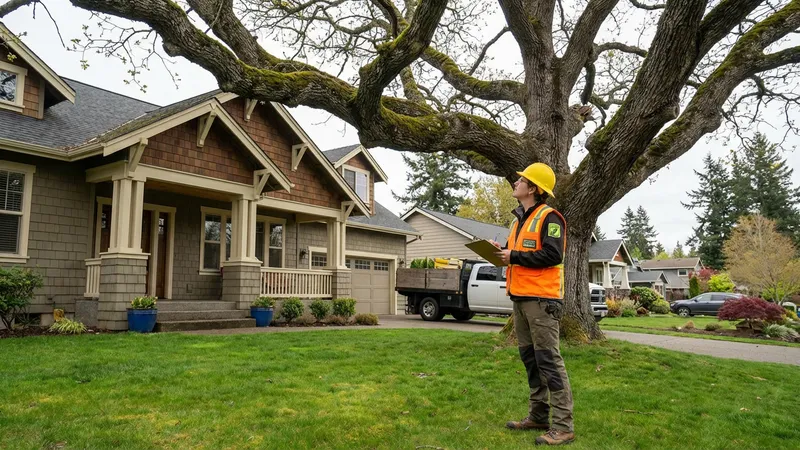
A certified arborist assessing a mature Garry oak on a residential property, documenting tree health and protection requirements before development begins.
Why Trees Come Before Design
The location and species of trees on your lot can fundamentally constrain what and where you can build. A protected Garry Oak with a 10-metre canopy creates a no-build zone around its critical root zone. This surprises many property owners.
Architects and designers work within constraints. The sooner those constraints are identified, the more efficiently they can design. An arborist report arriving after schematic design is complete can force an expensive redesign — or reveal the proposed building simply won't fit.
ISA Certified Arborist vs. Registered Consulting Arborist
There are two main credentials you'll encounter:
- ISA Certified Arborist: Certified by the International Society of Arboriculture. This is the baseline credential demonstrating competence in tree biology, care, and assessment.
- Registered Consulting Arborist (RCA): An advanced credential from the American Society of Consulting Arborists, now integrated into ISA's Qualified designation. RCAs specialize in written reports, appraisals, and expert testimony, the services you need for development applications.
Some municipalities on Vancouver Island specifically require an RCA or equivalent for development permit submissions. Check with your local planning department before engaging an arborist to ensure they hold the credential your municipality accepts.
Municipal Tree Protection on Vancouver Island
Tree protection bylaws vary significantly across Vancouver Island municipalities. Here's what you need to know about the major ones:
District of Saanich
Saanich has one of the most comprehensive tree protection bylaws in the region. Protected trees include all trees over 30 cm diameter at breast height (DBH) — that is, measured 1.4 metres above ground — within a Development Permit Area. Significant trees over 50 cm DBH are protected on all residential properties.
Saanich requires a 2:1 replacement ratio: remove one protected tree and you must plant two replacements of a specified minimum size. A Tree Management Plan prepared by a qualified arborist is required for any development that affects protected trees.
City of Victoria
Victoria's Tree Preservation Bylaw protects trees over 30 cm DBH on private property. A tree removal permit is required, and the process requires an arborist report for any tree proposed for removal as part of a development application.
Victoria also protects boulevard trees — trees in the municipal right-of-way adjacent to your property. These cannot be removed without City approval, even if they affect your construction access.
City of Langford
Langford's tree management requirements are generally less restrictive than Saanich or Victoria. However, trees within Development Permit Areas still require assessment. Langford has specific requirements for trees in environmentally sensitive areas, particularly near watercourses.
City of Colwood
Colwood protects significant trees on development sites and requires tree management plans for projects affecting trees over 20 cm DBH in certain zones. Colwood has been particularly focused on retaining tree canopy as the city grows rapidly.
District of Oak Bay
Oak Bay has strong tree protection, reflecting its character as a mature, tree-lined community. Protected trees include all trees over 30 cm DBH, with particular emphasis on Garry Oaks and other native species. Oak Bay's Heritage Tree Registry provides additional protection for trees of historical or ecological significance.
Garry Oak Ecosystems: Vancouver Island's Special Case
Garry Oak (Quercus garryana) ecosystems are one of the most endangered ecosystems in Canada. They are concentrated in the Greater Victoria area. These ecosystems receive special protection under BC's environmental framework, and many municipalities have additional protections specifically for Garry Oaks.
If your property has Garry Oaks, you need an arborist who understands both their biological requirements and the regulatory framework protecting them. Garry Oaks have extensive root systems that are sensitive to soil compaction, grade changes, and drainage alterations. The critical root zone can extend well beyond the canopy drip line, creating a substantial constraint on development.
This doesn't necessarily mean you can't build. It means the design must accommodate the trees — not the other way around. An experienced arborist can identify which trees are genuinely protected and which can potentially be removed with proper mitigation.
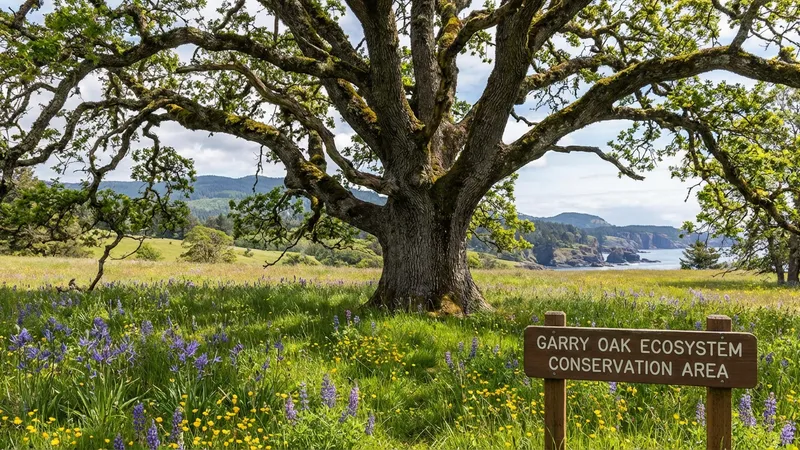
Garry oak ecosystems are among the most endangered in Canada, with less than 5% of the original habitat remaining on southeast Vancouver Island.
What an Arborist Delivers
Depending on your project, an arborist typically prepares one or more of the following:
Arborist Assessment Report
A baseline inventory and assessment of all trees on your property. The report documents species, size, condition, health, structural integrity, and retention value. This is the starting point for all tree-related decisions.
Tree Preservation/Management Plan
A detailed plan showing which trees will be retained, which will be removed, and what protective measures will be in place during construction. This is usually required as part of a Development Permit application. Protective measures include tree protection fencing, root zone protection zones, and pruning specifications.
Tree Replacement Plan
Specifies replacement trees — species, size, location, and planting details — to compensate for any trees removed. Municipalities have specific requirements for replacement tree species and minimum caliper (trunk diameter) at planting.
Construction Impact Assessment
Evaluates how proposed construction will affect trees being retained. This includes impacts from excavation, grade changes, utility trenching, and construction equipment access. The arborist may recommend specific construction methods — hand digging near roots, air spading, temporary root bridging — to protect retained trees.
Typical Costs on Vancouver Island
| Service | Typical Cost Range |
|---|---|
| Arborist assessment report (standard residential lot) | $500–$1,500 |
| Tree management/preservation plan | $1,000–$2,500 |
| Comprehensive report + management plan | $1,500–$3,500 |
| Construction monitoring (per visit) | $200–$500 |
How to Choose an Arborist for Development Work
- Verify credentials: Confirm ISA Certification or RCA designation, and check which credential your municipality requires
- Development experience: Choose an arborist experienced with development applications, not just tree care. The skills required for writing reports that satisfy municipal planners are different from pruning expertise
- Local knowledge: An arborist familiar with your municipality's specific bylaw and planning department will produce a report that aligns with what the planners expect
- Ask about turnaround: Reports typically take 2–4 weeks. Plan accordingly; the arborist report needs to be ready before the architect begins detailed design
Check Your Property's Development Potential
Our development potential assessment guide and free tool give you a preliminary look at what your Vancouver Island property can support, helping you understand the scope of work before engaging consultants.
Start Your AssessmentThe Complete Consultant Guide Series
- Overview: Building Your Development Team
- Part 1: BC Land Surveyor (BCLS)
- Part 2: Certified Arborist — You Are Here
- Part 3: Geotechnical Engineer
- Part 4: Building Architect (AIBC)
- Part 5: Structural Engineer
- Part 6: Civil Engineer
- Part 7: Building Envelope Consultant + Energy Advisor
- Part 8: Landscape Architect (BCSLA)
- Part 9: Environmental Consultant (QEP)
- Part 10: Traffic Engineer
Disclaimer: This article provides general information about arborist services and tree protection bylaws in BC as of February 2026. Municipal bylaws change frequently. Always confirm current requirements with your local planning department before removing or altering any trees. This is not legal or professional advice.