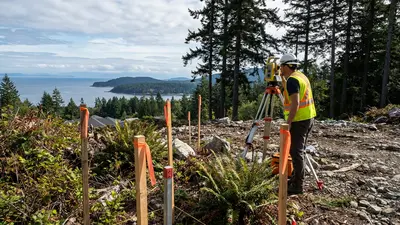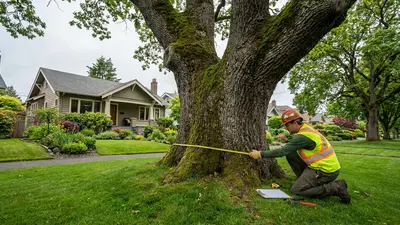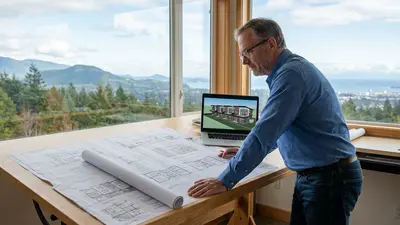
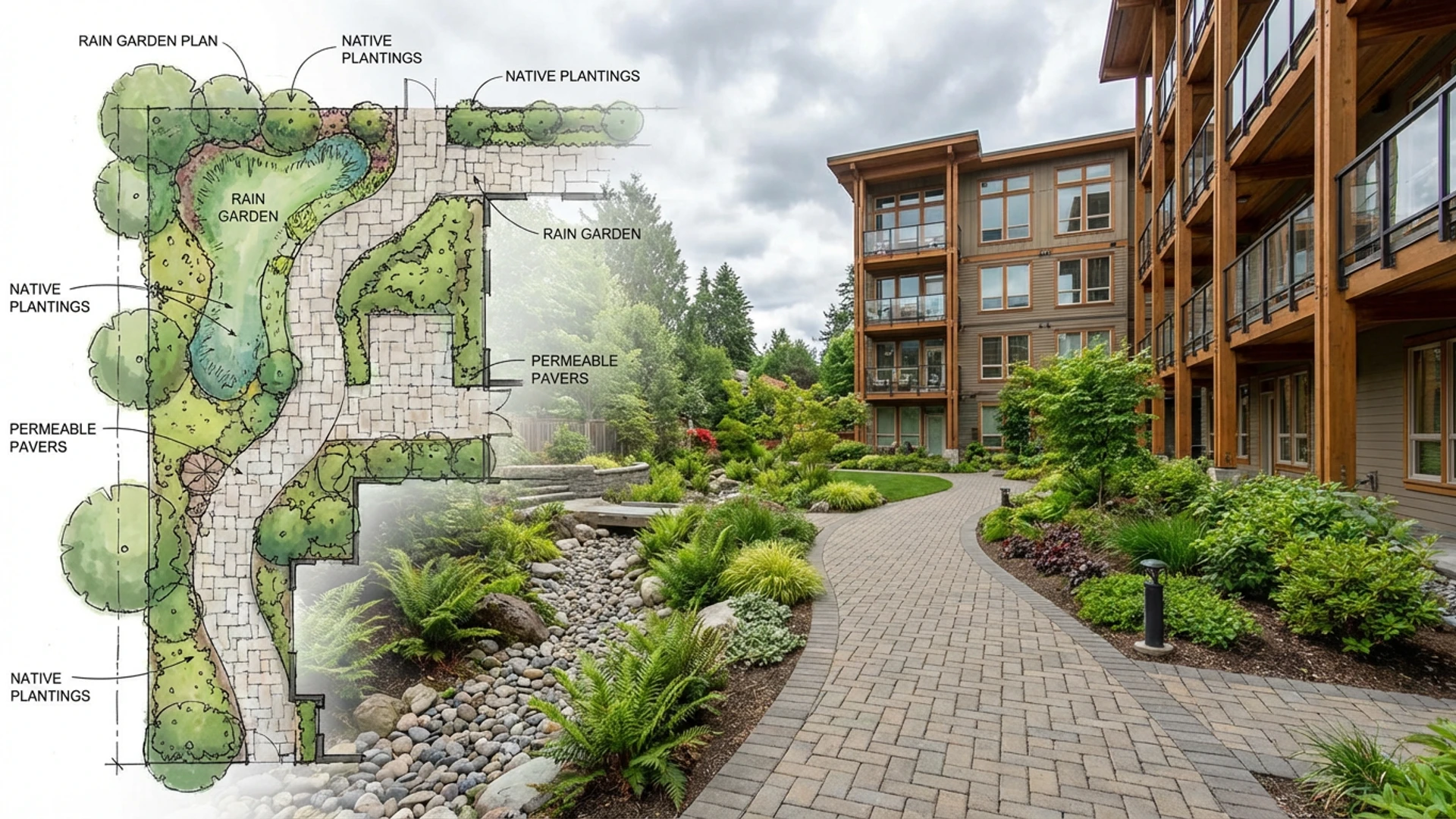
The landscape architect designs everything outside the building footprint — and on Vancouver Island, that exterior space must do more than look attractive. It needs to manage stormwater, replace trees removed during construction, meet municipal Development Permit requirements, provide accessible pathways, and create functional outdoor living spaces. This is site design as engineering, not just aesthetics. As covered in our development consultants guide, the landscape architect coordinates with civil engineers, arborists, and architects.
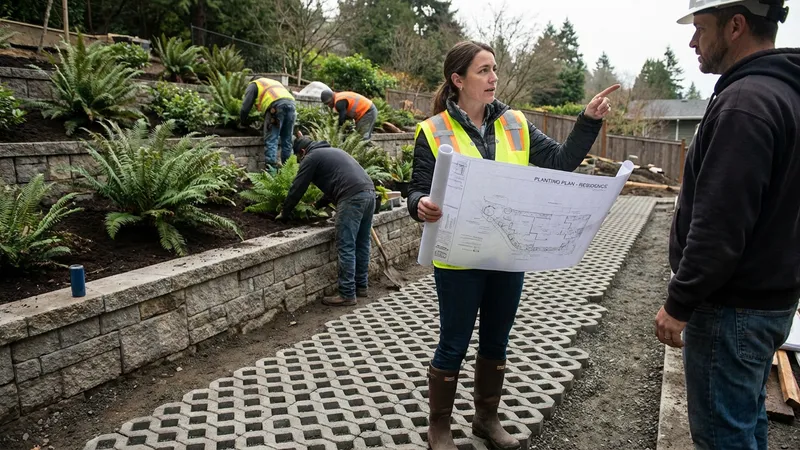
A landscape architect directing the implementation of a planting plan, coordinating native species installation with retaining walls and permeable paving.
BCSLA Registration
Landscape architects in British Columbia are registered with the BC Society of Landscape Architects (BCSLA). Registration requires a professional degree in landscape architecture, a period of supervised experience, and successful completion of professional examinations.
For development applications, many municipalities prefer or require landscape plans prepared by a registered landscape architect, particularly for projects in Development Permit Areas or multi-unit developments where site design is reviewed as part of the approval process.
When Is a Landscape Plan Required?
A professional landscape plan is typically required in these situations on Vancouver Island:
- Development Permit Areas (DPAs): Most multi-unit developments and many subdivisions fall within DPAs where the municipality reviews form and character, including landscape design. The landscape plan must demonstrate compliance with DPA guidelines for planting, screening, outdoor amenity space, and stormwater management
- Multi-unit residential: Projects with three or more units almost always require a landscape plan as part of the Development Permit process. This includes SSMUH fourplexes in many municipalities
- Subdivision: New lot creation may require landscape plans for common areas, buffer plantings, and stormwater management features
- Municipal requirements: Some municipalities require landscape plans even for simpler projects like duplexes or garden suites, particularly when tree removal is involved
Site Planning: More Than Planting
A landscape architect's scope extends far beyond selecting plants. For development projects, site planning includes:
- Grading and drainage: Working with the civil engineer, the landscape architect designs site grades that direct water away from buildings, toward stormwater management features, and off the site in a controlled manner
- Parking layout: For multi-unit projects, the landscape architect often designs parking areas, including surface parking, driveway access, turning radii, and screening between parking and residential areas
- Outdoor living spaces: Patios, decks, shared amenity areas, and private outdoor spaces are designed to be functional and comply with municipal requirements for usable outdoor space per unit
- Pedestrian circulation: Pathways, stairs, ramps, and connections between buildings, parking, and the street must be designed for safety, accessibility, and municipal standards
Municipal Landscape Standards on Vancouver Island
Landscape requirements vary significantly between municipalities:
- Langford: As one of the fastest-growing municipalities on Vancouver Island, Langford has developed detailed landscape standards for its many new subdivisions and multi-unit projects. Their requirements emphasize drought-tolerant planting, stormwater management integration, and tree canopy replacement
- Victoria: Victoria's landscape requirements focus on heritage character preservation, urban tree canopy enhancement, and integration with the city's green infrastructure network. The city has specific guidelines for streetscape design in different neighbourhoods
- Saanich: Saanich's landscape requirements are closely tied to their comprehensive tree protection bylaw. Replacement tree planting ratios are strict, and landscape plans must demonstrate how removed trees will be replaced and how retained trees will be protected during and after construction
Stormwater Management Integration
On Vancouver Island, the landscape architect plays a critical role in stormwater management. Working with the civil engineer's drainage design, the landscape architect integrates stormwater features into the landscape design:
- Rain gardens: Depressed planting beds designed to capture and filter stormwater runoff. They are planted with species that tolerate both wet and dry conditions, a particular consideration on Vancouver Island where summer drought follows winter rainfall
- Bioswales: Vegetated channels that convey and filter stormwater. They are designed to slow water velocity, allow sediment to settle, and promote infiltration into the soil
- Permeable surfaces: Permeable pavers, porous concrete, and gravel surfaces that allow rainwater to infiltrate directly through the ground surface rather than running off to the storm drain system
Tree Replacement and Retention
The landscape architect works directly with the arborist's data to address tree replacement and retention requirements. When trees are removed for development, the landscape plan must show where replacement trees will be planted, what species and sizes will be used, and how the replacement planting meets the municipality's requirements.
Retained trees require protection during construction. The landscape architect specifies tree protection fencing locations, no-dig zones, and construction access routes that avoid critical root zones. These details are coordinated with the arborist's Tree Management Plan and the civil engineer's site servicing plan to ensure underground utilities don't conflict with retained tree roots.
Accessibility Requirements
Multi-unit developments on Vancouver Island must increasingly address accessibility in site design. This includes accessible pathways from parking to building entries, accessible common outdoor spaces, and grade-appropriate connections that accommodate wheelchairs and mobility aids.
The landscape architect designs these features to meet BC Building Code accessibility requirements while integrating them naturally into the overall site design.
Native Planting in BC Context
There is growing emphasis across Vancouver Island municipalities on using native and climate-appropriate plant species in landscape plans. Drought-tolerant, low-maintenance species reduce long-term irrigation needs — a significant consideration given Vancouver Island's increasingly dry summers and water conservation pressures.
Native species appropriate for Vancouver Island landscapes include sword fern, Oregon grape, salal, kinnikinnick, red-flowering currant, and native grasses. These species are adapted to the local climate, support native pollinators and wildlife, and require minimal irrigation once established. The landscape architect selects species appropriate for each microclimate on the site — sun exposure, drainage, wind exposure, and soil conditions all influence species selection.
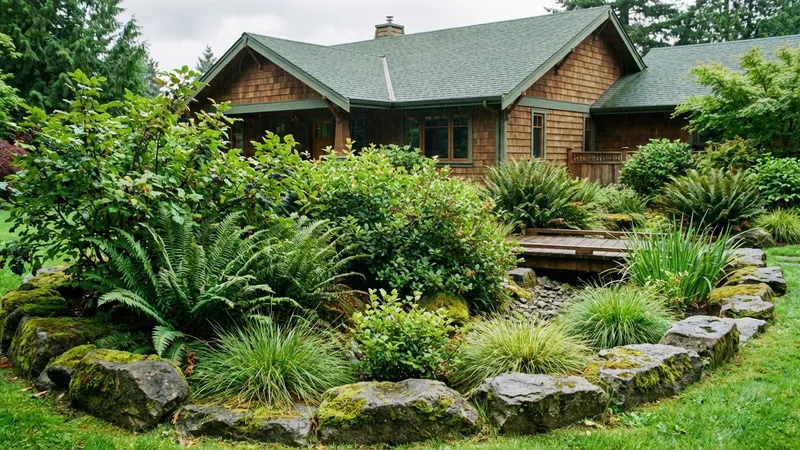
An established native plant garden featuring sword fern, Oregon grape, and natural stone, designed for Vancouver Island's climate with minimal irrigation needs.
Typical Costs on Vancouver Island
| Service Type | Typical Cost Range |
|---|---|
| Residential landscape plan | $3,000–$7,000 |
| Multi-unit site design | $5,000–$15,000 |
| Development Permit landscape submission | $4,000–$10,000 |
Fees depend on site size, project complexity, municipal requirements, and the level of detail required for the Development Permit process. Larger multi-unit projects with integrated stormwater management features cost more to design.
How to Choose a Landscape Architect
- Verify BCSLA registration: Confirm membership through the BCSLA directory
- Development project experience: Choose a landscape architect experienced with Development Permit submissions on Vancouver Island, not just residential garden design
- Stormwater integration: Experience designing integrated stormwater management features is increasingly important as municipalities tighten requirements
- Coordination skills: The landscape architect must coordinate with the civil engineer, arborist, and architect. Choose someone who works well in a multi-disciplinary team
Check Your Property's Development Potential
Site design starts with understanding what your property can support. Our free Development Potential Assessment analyzes your Vancouver Island property against SSMUH, TOA, and subdivision regulations.
Start Your AssessmentThe Complete Consultant Guide Series
- Overview: Building Your Development Team
- Part 1: BC Land Surveyor (BCLS)
- Part 2: Certified Arborist
- Part 3: Geotechnical Engineer
- Part 4: Building Architect (AIBC)
- Part 5: Structural Engineer
- Part 6: Civil Engineer
- Part 7: Building Envelope Consultant + Energy Advisor
- Part 8: Landscape Architect (BCSLA) — You Are Here
- Part 9: Environmental Consultant (QEP)
- Part 10: Traffic Engineer
Disclaimer: This article provides general information about landscape architecture for development in BC as of February 2026. Municipal requirements vary and change frequently. Always confirm specific landscape requirements with your local planning department and engage qualified professionals. This is not legal or professional advice.