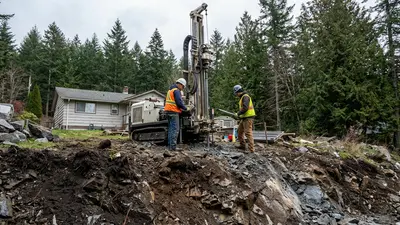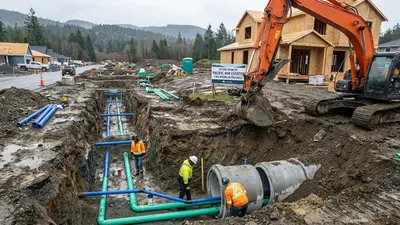
On Vancouver Island, two forces converge to make building envelope and energy performance critically important. The region receives some of the heaviest rainfall in Canada. And BC's Energy Step Code imposes escalating efficiency requirements that are among the most ambitious in North America. The building envelope consultant and energy advisor work together to ensure your building keeps water out and energy in — protecting both your investment and the environment.
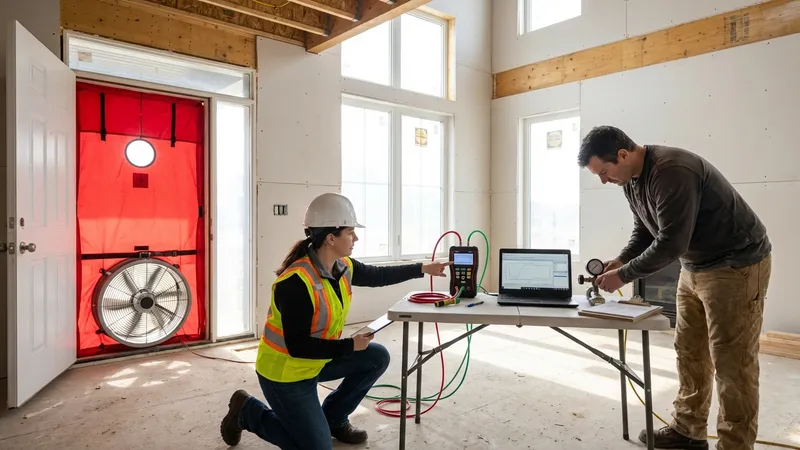
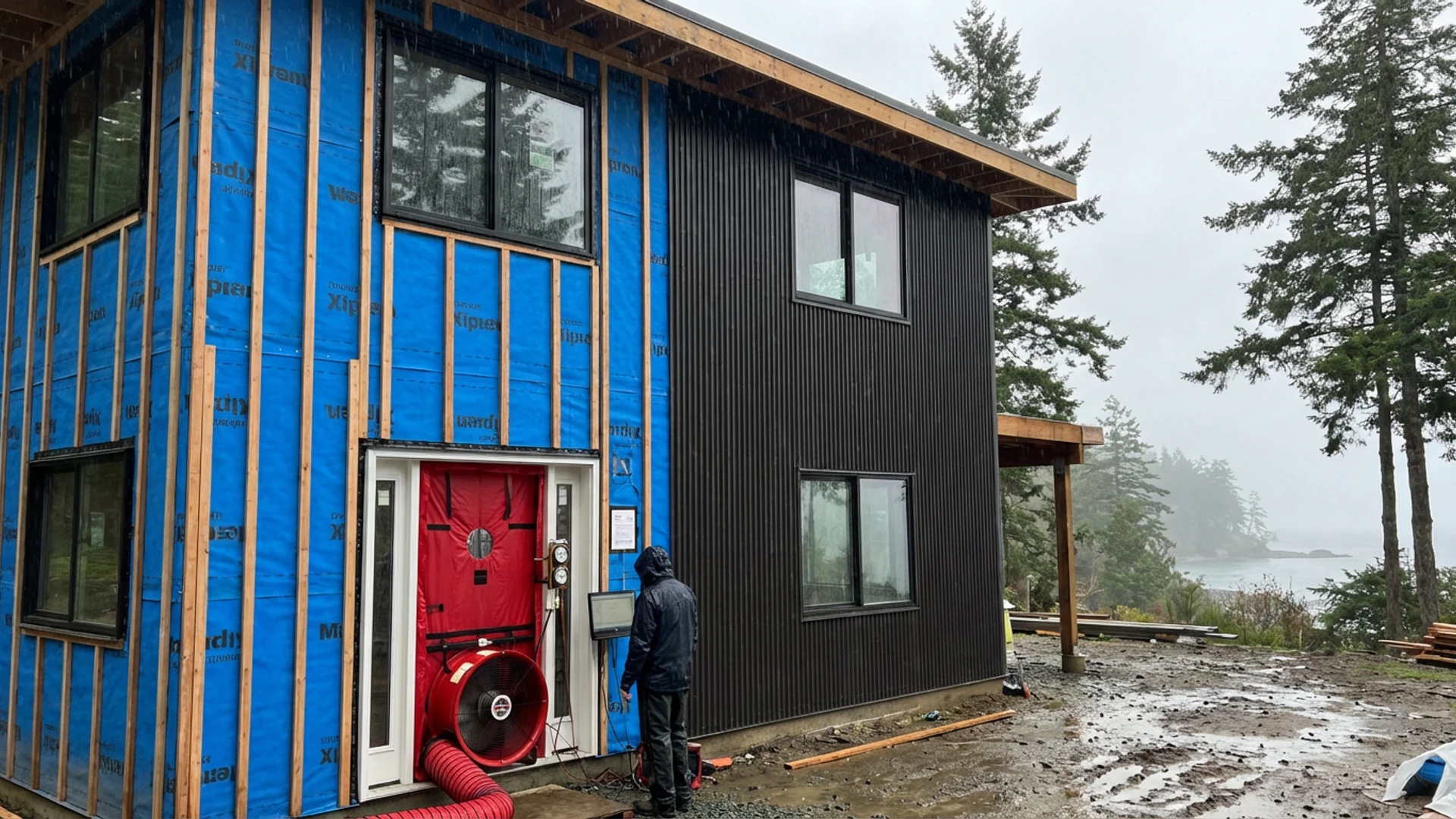
A blower door airtightness test in progress, measuring air leakage to verify the building envelope meets BC Energy Step Code requirements.
Building Envelope: Why It's Critical on Vancouver Island
The building envelope is the boundary between the conditioned (heated and cooled) interior and the exterior environment: walls, roof, windows, doors, and foundation. On Vancouver Island, where annual rainfall ranges from 600 mm in the rain shadow of the Saanich Peninsula to over 3,000 mm on the west coast, the envelope's ability to manage moisture is the single most important factor in a building's long-term durability.
Vancouver Island's climate is particularly challenging. Heavy rain, moderate temperatures, and high humidity mean moisture can move in both directions through the wall assembly — from inside to outside and vice versa. This creates complex conditions that require careful design to manage properly.
BC's Rain Screen Wall Requirements (BCBC 9.27)
The BC Building Code Section 9.27 mandates rain screen wall construction for most of the province, including all of Vancouver Island. A rain screen wall includes a drainage cavity — an air gap — between the exterior cladding and the weather-resistant barrier. Any water that penetrates the cladding drains harmlessly out of the wall rather than being trapped inside.
This requirement was introduced in response to BC's devastating experience with building envelope failures. The code now requires a minimum 10 mm drainage cavity behind all cladding types except those specifically exempt (such as masonry veneer with weep holes). The building envelope consultant ensures that wall assembly design meets these requirements and that details at windows, doors, penetrations, and transitions are properly designed to prevent moisture intrusion.
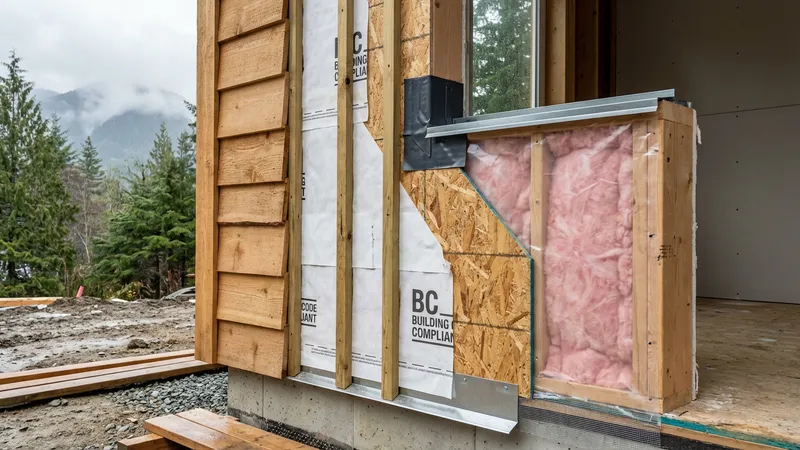
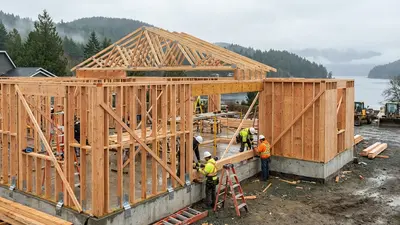
A rain screen wall assembly under construction, showing the drainage cavity between cladding and weather barrier that BC's building code requires.
The Leaky Condo Crisis: BC's Cautionary Tale
In the 1990s, British Columbia experienced a building envelope failure crisis affecting an estimated 65,000 housing units. The resulting remediation costs ran into billions of dollars. The "leaky condo crisis" resulted from building practices that failed to manage moisture in BC's wet climate, particularly the widespread use of face-sealed stucco systems with no drainage cavity and inadequate flashing details.
The crisis led to the Barrett Commission investigation, fundamental changes to the BC Building Code (including mandatory rain screen construction), the creation of the Homeowner Protection Act, and the establishment of BC Housing's research and education programs on building envelope performance. This history is why BC takes envelope performance so seriously.
Building Envelope Professional (BEP) Designation
A Building Envelope Professional (BEP) is an engineer or architect with specialized training and experience in building envelope design and performance assessment. While not a statutory designation, the BEP credential — administered through training programs from organizations like BC Housing — indicates specific competence in moisture management, building science, and envelope design for BC's climate.
For multi-unit residential projects, many municipalities and lenders require building envelope review by a qualified BEP. Even for smaller projects like SSMUH garden suites and fourplexes in Greater Victoria, engaging a BEP for envelope design review provides assurance that the wall, roof, and window details will perform in Vancouver Island's demanding climate. The envelope consultant is one of the key professionals in your development consultant team.
BC Energy Step Code: Escalating Efficiency Requirements
The BC Energy Step Code is a performance-based system with five steps of increasing energy efficiency. Rather than prescribing specific materials or systems, the Step Code sets performance targets that can be met through any combination of design strategies:
- Step 1: Enhanced compliance, approximately 10% better than base code. This is the current minimum for most jurisdictions
- Step 2: Approximately 20% improvement over base code. Many municipalities on Vancouver Island now require Step 2 or higher
- Step 3: Approximately 40% improvement. Increasingly common as a municipal requirement, this step typically requires high-performance windows, enhanced insulation, and improved air-tightness
- Step 4: Approximately 60% improvement. Requires sophisticated building design including heat recovery ventilation, high-performance building envelope, and often heat pump space and water heating
- Step 5: Net-zero energy ready. The building produces as much energy as it consumes on an annual basis. Few municipalities currently require Step 5, but it represents the provincial target for future code requirements
Municipal requirements vary — Langford, Victoria, and Saanich each set their own Step Code requirement, and these are being ratcheted up over time. BC's CleanBC plan calls for all new buildings to be net-zero energy ready by 2032, meaning Step 5 will eventually become the baseline.
The Energy Advisor's Role
A certified energy advisor is responsible for demonstrating that the building design meets Step Code requirements through energy modelling and testing:
- Pre-construction energy modelling: Using software (typically HOT2000 for Part 9 buildings), the energy advisor models the building's energy performance based on the architectural plans, wall assemblies, window specifications, mechanical systems, and building orientation. This modelling must demonstrate compliance with the target Step before the building permit is issued
- Blower door testing: During and after construction, the energy advisor conducts airtightness testing. A blower door depressurizes the building and measures the air leakage rate. The Step Code sets maximum air leakage rates at each Step, and the building must meet this target to receive the final occupancy permit
- EnerGuide rating: The energy advisor calculates the building's EnerGuide energy efficiency rating, which becomes part of the building's documentation. Higher-performing buildings may qualify for incentive programs
Incentive Programs
Building beyond minimum Step Code requirements can unlock financial incentives from BC Hydro and FortisBC. These programs provide rebates for high-performance windows, heat pumps, heat recovery ventilators, and overall energy performance exceeding minimum requirements. The energy advisor can help identify which incentives your project qualifies for and optimize the design to maximize available rebates.
CleanBC requirements also influence available incentives. The provincial government provides additional funding for buildings that demonstrate significant emissions reductions — particularly those using electric heating instead of natural gas.
Typical Costs on Vancouver Island
| Service Type | Typical Cost Range |
|---|---|
| Envelope review / consulting | $2,000–$5,000 |
| Energy modelling (HOT2000) | $1,500–$4,000 |
| Blower door test | $400–$800 |
| Full Step Code compliance package | $3,000–$7,000 |
Costs depend on building size, target Step level, and complexity. Higher Steps require more detailed modelling and may require multiple blower door tests during construction. The full compliance package typically includes pre-construction modelling, mid-construction testing, and final testing.
How to Choose an Envelope Consultant and Energy Advisor
- BEP designation: For envelope review, look for a Building Envelope Professional with experience in residential construction on Vancouver Island
- NRCan certification: Energy advisors should be certified through Natural Resources Canada to provide EnerGuide ratings and Step Code compliance documentation
- Step Code experience: Choose an energy advisor experienced with the specific Step your municipality requires; the modelling and testing requirements differ at each level
- Early engagement: Both the envelope consultant and energy advisor should be engaged during design, not after the architect has finalized the plans. Retrofitting envelope and energy improvements into a completed design is expensive and often compromises performance
Check Your Property's Development Potential
Understanding what you can build is the first step toward designing an energy-efficient building. Our development potential assessment guide and free tool analyze your Vancouver Island property's development options.
Start Your AssessmentThe Complete Consultant Guide Series
- Overview: Building Your Development Team
- Part 1: BC Land Surveyor (BCLS)
- Part 2: Certified Arborist
- Part 3: Geotechnical Engineer
- Part 4: Building Architect (AIBC)
- Part 5: Structural Engineer
- Part 6: Civil Engineer
- Part 7: Building Envelope Consultant + Energy Advisor — You Are Here
- Part 8: Landscape Architect (BCSLA)
- Part 9: Environmental Consultant (QEP)
- Part 10: Traffic Engineer
Disclaimer: This article provides general information about building envelope consulting and energy advisory services in BC as of February 2026. Step Code requirements vary by municipality and are subject to change. Always confirm current requirements with your local building department and engage qualified professionals. This is not legal or professional advice.