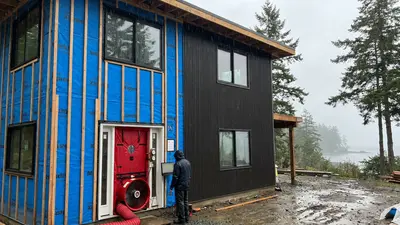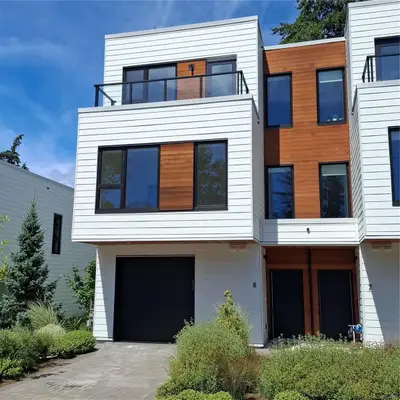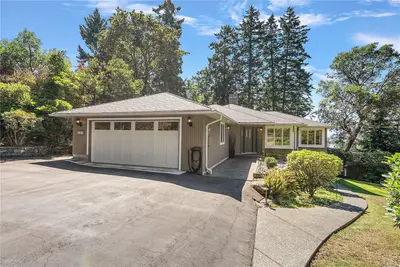
Every building needs bones, and the structural engineer designs them. On Vancouver Island — one of the most seismically active regions in Canada — structural engineering goes far beyond sizing beams and columns. It means designing buildings that can withstand the Cascadia Subduction Zone, resist Pacific storm loads, and transfer all those forces safely into foundations suited to the site's specific soil conditions. As outlined in our development consultants guide, the structural engineer works closely with the geotechnical engineer and architect.
EGBC Registration: The Regulatory Framework
Structural engineers in BC must be registered as Professional Engineers (P.Eng.) with Engineers and Geoscientists BC (EGBC). Registration requires a recognized engineering degree, supervised work experience (typically four years), and successful completion of professional practice examinations.
Only registered P.Eng. professionals can stamp structural drawings and take legal responsibility for structural design in BC. This is not a formality — it is a legal requirement enforced through BC's Letters of Assurance system.
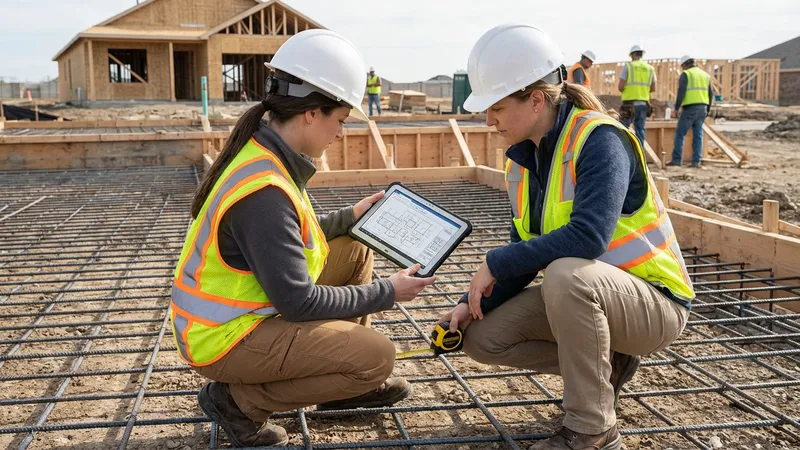
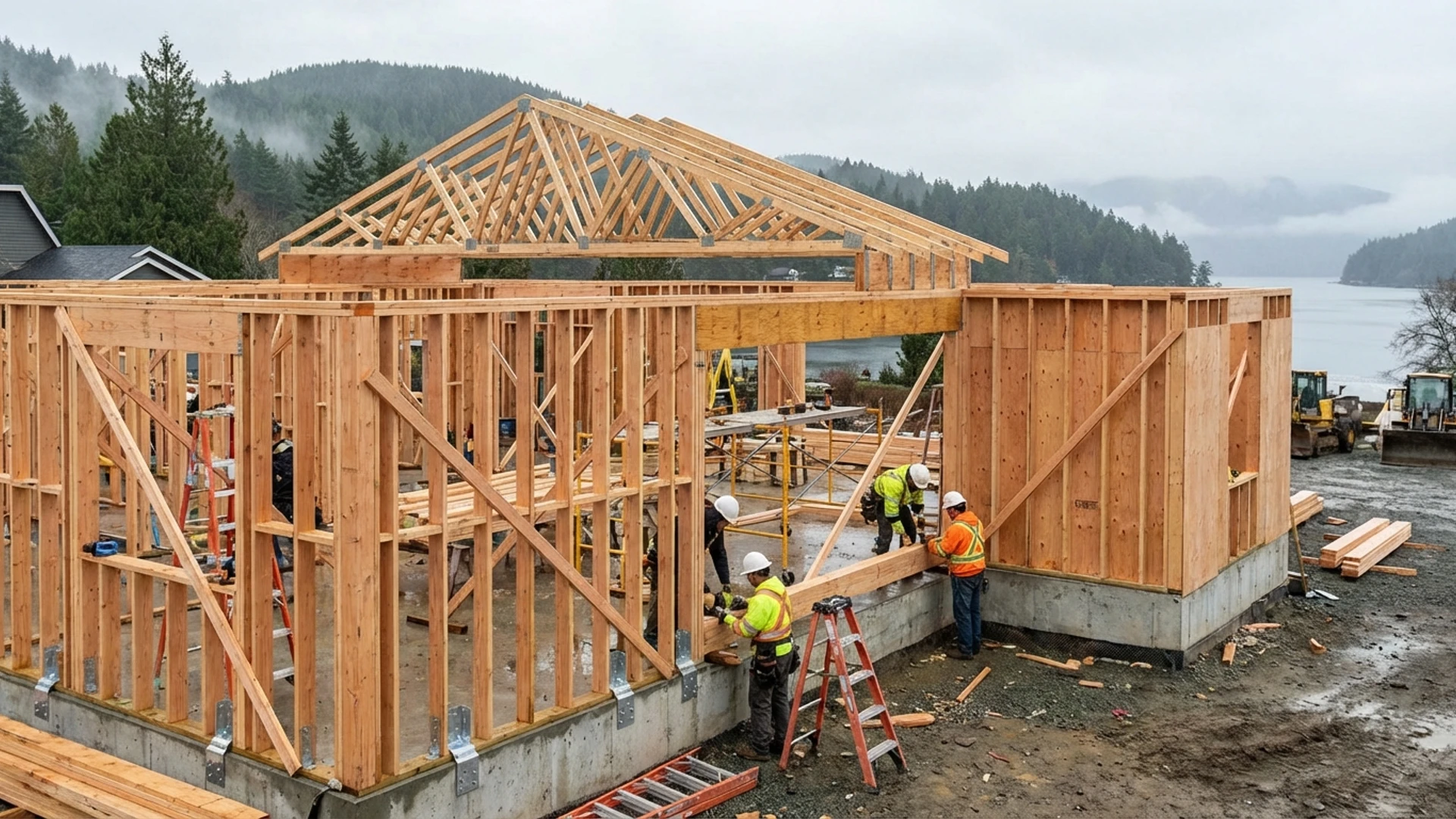
Structural engineers reviewing rebar placement for a residential foundation, ensuring the design meets seismic requirements for Vancouver Island.
When Is Structural Engineering Required?
Not every residential project requires a structural engineer, but many do:
- All Part 3 buildings: Any building exceeding Part 9 limits (over 600 m² building area or over three storeys) requires structural engineering as part of the Letters of Assurance process
- Complex Part 9 buildings: Even smaller buildings need structural engineering when they involve engineered trusses, unusual spans (open-concept living areas, large garage openings), heavy loads (green roofs, rooftop decks), or unconventional structural systems
- Retaining walls: Walls over 1.2 metres in height generally require engineered design. On Vancouver Island's sloped terrain, retaining walls are extremely common
- Buildings on challenging soil or slopes: When the geotechnical report identifies special foundation requirements, piles, grade beams, reinforced mat foundations, a structural engineer designs the foundation system
- Renovations involving structural changes: Removing load-bearing walls, adding storeys, or modifying foundations in existing buildings requires structural assessment and design
Vancouver Island Seismic Design
The Cascadia Subduction Zone is the dominant seismic hazard for Vancouver Island. This fault system — where the Juan de Fuca tectonic plate subducts beneath the North American plate — is capable of producing magnitude 9+ megathrust earthquakes. The structural engineering implications are profound.
The BCBC assigns Seismic Design Categories based on building importance and the seismic hazard at the site (which the geotechnical engineer determines through Site Classification). Higher categories trigger more stringent design requirements: more detailed analysis methods, specific connection detailing requirements, and limitations on which structural systems can be used.
For residential buildings on Vancouver Island, seismic design requirements are among the most stringent in Canada — comparable to areas of the Lower Mainland. This affects everything from foundation connections to roof framing details.
Wood-Frame Construction: Sophisticated Engineering Behind a Familiar Material
Wood-frame construction dominates residential building on Vancouver Island. It is economical, sourced from local forestry operations, and performs well in the moderate climate. When properly engineered, it also provides excellent seismic performance. The engineering behind modern wood-frame buildings is far more sophisticated than most people realize.
Shear Walls
Shear walls are the primary lateral force-resisting system in wood-frame buildings. These walls — typically plywood or OSB sheathing nailed to wood studs with specific nail patterns — resist horizontal forces from earthquakes and wind.
The structural engineer specifies which walls are shear walls, the sheathing material and thickness, nail size and spacing, and how the shear forces are transferred through the building from roof to foundation.
Hold-Downs and Anchor Bolts
When seismic forces push a building sideways, the building wants to overturn at the corners. Hold-down connectors resist this overturning force by anchoring the building frame to the foundation.
On Vancouver Island, seismic forces are large enough that hold-down design is critical. Improperly designed or installed hold-downs are one of the most common structural deficiencies found during construction inspections.
Lateral Force Resistance
The structural engineer must trace the path of lateral forces from the roof diaphragm — which collects the forces — through the shear walls to the foundation. Every connection in this chain must be designed to carry the forces without failure.
In multi-storey buildings, forces accumulate at lower levels. This requires progressively stronger connections and shear walls toward the base of the building.
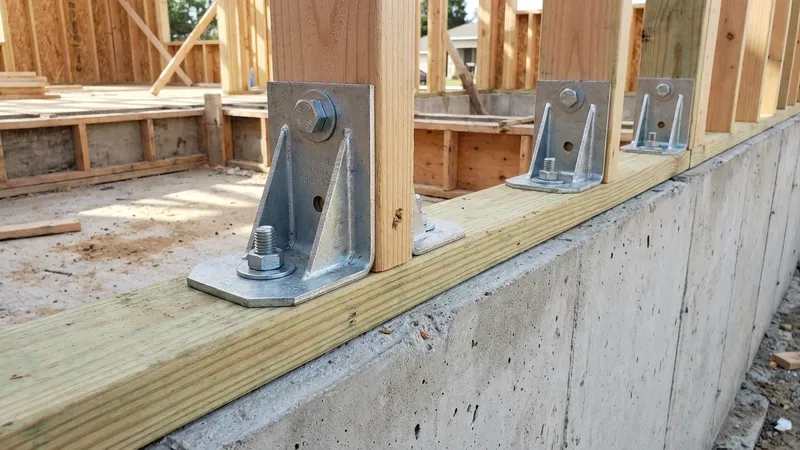
Seismic hold-down hardware connecting the wood frame to the concrete foundation, a critical detail for earthquake resistance on Vancouver Island.
Letters of Assurance: Schedule B Responsibility
Under BC's Letters of Assurance system, the structural engineer files a Schedule B confirming that their structural design complies with the BC Building Code. At project completion, they file a Schedule C-B confirming that construction was carried out in general conformance with their design.
This responsibility includes conducting field reviews during construction to verify that structural elements are built as designed. The number and timing of field reviews depend on project complexity. They typically include foundation inspection, framing inspection (shear walls, hold-downs, connections), and final structural inspection.
Interaction with the Geotechnical Engineer
Foundation design is where geotechnical and structural engineering intersect. The geotechnical report provides bearing capacity — how much load the soil can support — plus settlement estimates and seismic site classification. The structural engineer uses this data to design foundations that safely transfer building loads to the ground.
On Vancouver Island, this interaction is particularly important because soil conditions vary so dramatically. A foundation designed for rock in Victoria would fail on marine clay in Sidney. The structural engineer must design specifically for the soil conditions identified in the geotechnical report, not from generic assumptions.
Retaining Walls on Vancouver Island
Retaining walls are one of the most common structural engineering requirements on Vancouver Island. The region's hilly terrain means many building sites require grade changes managed by retaining walls.
Walls under 1.2 metres can often be built without engineering. Taller walls require a structural engineer to design for soil pressure, water pressure, seismic forces, and surcharge loads — the weight of soil, vehicles, or buildings above the wall.
Common retaining wall types on Vancouver Island include concrete gravity walls, reinforced concrete cantilever walls, mechanically stabilized earth (MSE) walls, and shotcrete walls anchored into rock. The structural engineer selects the appropriate type based on the geotechnical report and site conditions.
Typical Costs on Vancouver Island
| Service Type | Typical Cost Range |
|---|---|
| Garden suite structural design | $2,000–$5,000 |
| Residential duplex / fourplex | $5,000–$12,000 |
| Complex residential (slopes, multiple storeys) | $10,000–$20,000 |
| Retaining wall design | $2,000–$6,000 |
Fees increase with building complexity, seismic design category, number of field reviews required, and foundation complexity. Projects on challenging sites (slopes, poor soils) typically require more engineering time and higher fees.
How to Choose a Structural Engineer
- Verify EGBC registration: Confirm P.Eng. registration through the EGBC registrant directory
- Residential and seismic experience: Structural engineering is a broad field. Choose an engineer with specific experience in residential wood-frame construction and Vancouver Island seismic design
- Coordination approach: A good structural engineer works collaboratively with the architect and geotechnical engineer, resolving conflicts early rather than forcing expensive changes late in the process
- Field review commitment: Understand how many field reviews are included in the fee and how quickly the engineer can respond when construction reaches structural milestones
Check Your Property's Development Potential
Before engaging a structural engineer, understand your project scope. Our development potential assessment guide and free tool analyze your Vancouver Island property against SSMUH, TOA, and subdivision regulations.
Start Your AssessmentThe Complete Consultant Guide Series
- Overview: Building Your Development Team
- Part 1: BC Land Surveyor (BCLS)
- Part 2: Certified Arborist
- Part 3: Geotechnical Engineer
- Part 4: Building Architect (AIBC)
- Part 5: Structural Engineer — You Are Here
- Part 6: Civil Engineer
- Part 7: Building Envelope Consultant + Energy Advisor
- Part 8: Landscape Architect (BCSLA)
- Part 9: Environmental Consultant (QEP)
- Part 10: Traffic Engineer
Disclaimer: This article provides general information about structural engineering in BC as of February 2026. Structural requirements vary by building type, site conditions, and municipality. Always engage a registered Professional Engineer for structural design. This is not legal or professional advice.