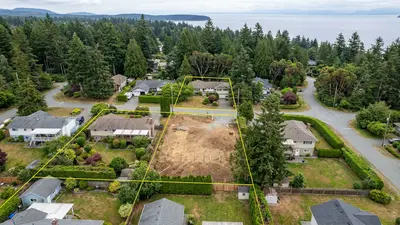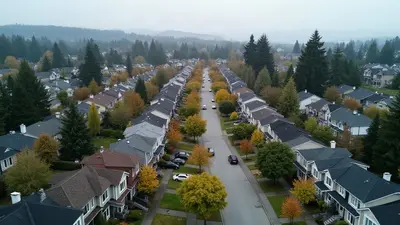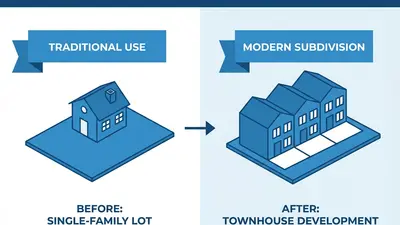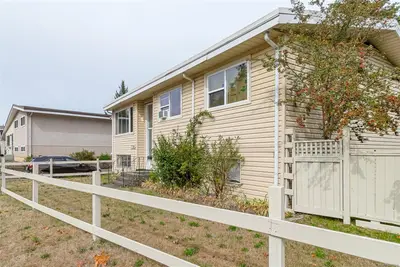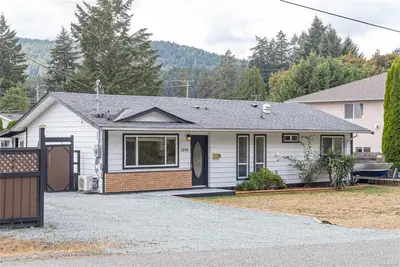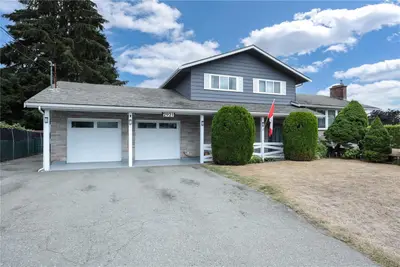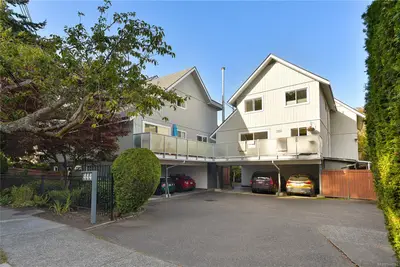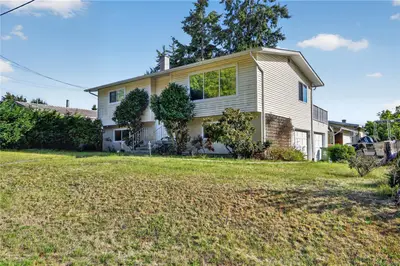
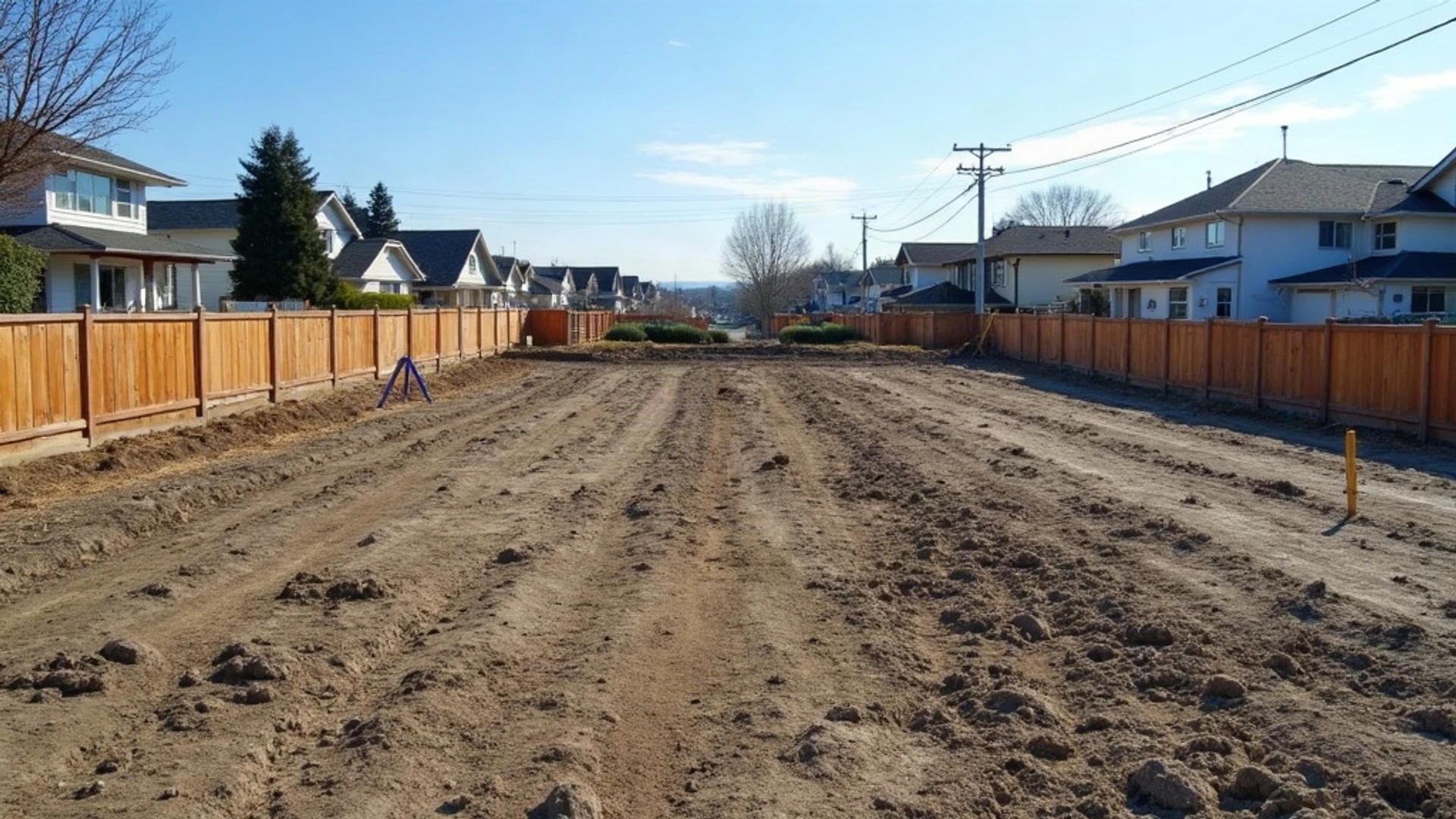
If the value of your property is in the land rather than the house, you are running a different sale. The buyer thinks differently, offers differently, and needs different information. Sellers who run this like an ordinary house sale usually get ordinary house money.
How a builder arrives at a number
A builder does not start from comparable sales. They start from what they can build and what it will sell for, then work backwards.
Roughly, they establish how many units the site permits, estimate what those units will sell or rent for when complete, subtract construction costs, municipal fees, financing, professional fees and the profit they require, and whatever remains is what the land is worth to them.
Two consequences follow from that, and both matter to you.
First, uncertainty is expensive. Every unknown in that calculation gets priced as risk, and risk is deducted from your number. The more clearly the site is defined before offers, the less of your price is lost to contingency.
Second, different builders arrive at different numbers, because they have different cost structures, different products and different required returns. This is a market worth running properly rather than accepting the first offer.
What to have ready before you go to market
The more of this that exists before a builder underwrites your site, the better your price and the shorter your subject period.
Confirmation of what the current zoning permits on your specific parcel. Not the municipal summary, your parcel.
Lot dimensions and area, and a survey if one exists.
Servicing information. Water, sewer and power capacity at the property, and whether upgrades would be required. This is one of the most common sources of an unpleasant surprise during due diligence.
Site constraints that a builder will find anyway. Slope, trees with protection, watercourses, easements, rights of way, contamination history.
Any existing municipal correspondence or applications relating to the property.
You do not need to do a builder's due diligence for them. You need to remove the questions that would otherwise be answered with a discount.
Subject clauses look different
Development purchases commonly carry longer and broader conditions than a residential sale. A builder may want time to confirm what the municipality will approve, and in some cases to take an application to a decision before they are committed.
That is not automatically bad for you. A longer subject period that produces a higher, better supported price can be worth more than a fast conditional sale that falls apart. What matters is that the conditions are specific, time bounded, and that the deposit structure reflects the risk you are carrying while the property is off the market.
This is a negotiation about certainty, not only about price, and it should be treated as one.
When neighbours matter
Some sites are worth considerably more combined than individually, because the assembled parcel supports a form of development that no single lot does. If your property sits in that situation, selling alone can be the most expensive decision available to you. This is covered further in land assemblies on Vancouver Island.
The reverse is also true. Not every group of lots is an assembly, and approaching neighbours without knowing whether it is changes your negotiating position for the worse.
Start with what the parcel supports
Everything above depends on one input, which is what your lot is actually permitted to carry. Run the free development potential assessment, then get a valuation that prices the site rather than the house standing on it.
Find out what your property can support
Run the free development potential assessment, then request a valuation that considers both the home and the land.
Local market: North Saanich real estate